Full Stack Marketer Outcomes Without Single-Hire Risk

Get end-to-end growth execution across acquisition, conversion and retention, delivered by a senior pod rather than one generalist hire.
Complete team in one
Weekly sprint delivery cadence
No long-term contracts

What a full stack marketer covers

A full stack marketer spans the whole funnel: demand creation and capture, conversion optimisation, and retention. In reality, one person rarely has senior depth in every area, especially across performance media, technical SEO, analytics, lifecycle, and creative production. Our model gives you the output you want from a full stack marketer, but delivered by a coordinated pod with specialists. Work is tied to unit economics, with clear priorities and a weekly cadence for shipping and learning.

Acquisition across key channels

Run paid search and paid social, supported by SEO and content where it makes sense. We align targeting, offers, and landing pages so acquisition is efficient and scalable, not just higher volume.

CRO and activation improvements

Increase conversion by fixing funnel drop-offs using analytics events, heatmaps, and recordings. We run focused tests on messaging, layouts, forms, and onboarding so more traffic turns into customers.

Retention and lifecycle systems

Improve LTV with segmentation and automated journeys across email and CRM: onboarding, nurture, win-back, and upsell. Cohort views guide what to fix first and how to measure impact.

The outcomes that matter

A strong full stack marketer improves the system, not just one channel. That means lowering CAC through better targeting and creative, increasing conversion rate by fixing funnel leakage, and improving LTV through retention and lifecycle work. We optimise for the commercial metrics that govern scale: payback period, contribution margin, and LTV to CAC. You get clear priorities and evidence-led decisions so growth is repeatable, not dependent on heroic individual effort.
  • Lower CAC and waste
  • Higher conversion and activation
  • Improved retention and LTV

Why pods beat one generalist

Hiring a full stack marketer can work early on, but it often becomes a bottleneck as soon as you need creative volume, reliable tracking, and multi-channel optimisation at the same time. Instead of betting everything on one profile, we provide a full stack output through a pod: senior strategy plus specialist execution, coordinated in a weekly sprint cadence. You get faster iteration, clearer accountability, and the ability to scale effort up or down without a long hiring cycle or a long-term contract.

Faster throughput than hiring

Skip recruitment, onboarding, and role gaps. We plug in with defined owners for performance, creative, analytics, and CRO, so multiple workstreams ship in parallel instead of sequentially.

Less risk, more coverage

A single hire can be a single point of failure. A pod reduces dependency on one person and avoids the uneven quality that often comes with fractional and freelance set-ups.

Unlimited creative production included

Creative is usually the constraint in performance marketing. We produce and test new concepts weekly, manage fatigue, and scale winners so you can grow without running out of ads.
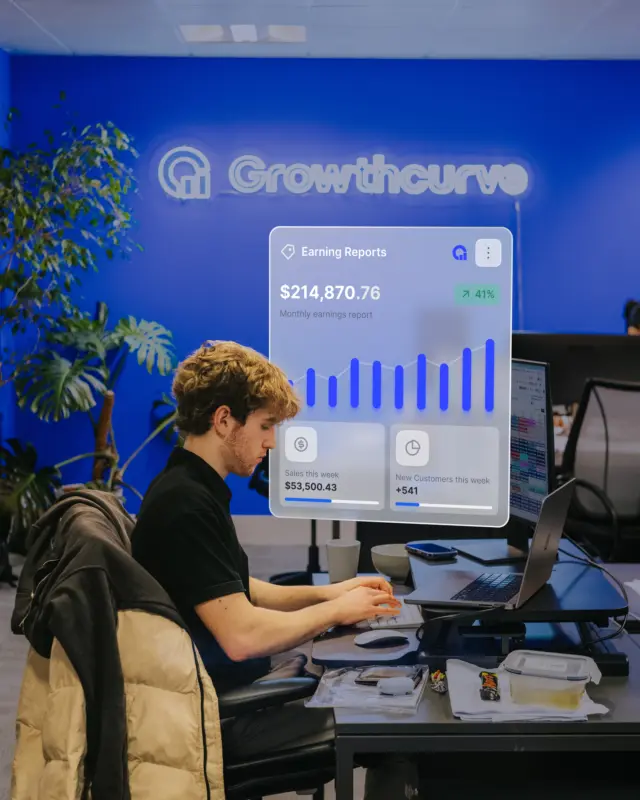
Measurement and automation foundations

Full stack work breaks down when measurement is inconsistent or when teams cannot connect performance to revenue. We set up a practical measurement layer and operating rhythm so your full funnel activity is trackable and improvable. That includes event hygiene in GA4, consistent UTMs, and consent-aware tracking patterns. We also build dashboards that surface what changed and what to do next. This removes guesswork and keeps optimisation focused on the metrics that fund growth.

GA4 event and UTM hygiene

Standardise events and conversions, clean up UTMs, and remove duplicated tracking. This makes reports consistent and improves optimisation signals across ad platforms and analytics.

Lifecycle and CRM automation

Implement segmented journeys in your CRM and ESP: onboarding, nurture, reactivation, and upsell. We focus on behavioural triggers that improve retention and revenue, not generic newsletters.

Dashboards tied to unit economics

Build a real-time view of CAC, payback, conversion rate, and retention by cohort. Reporting stays BLUF so stakeholders can decide quickly and keep the backlog prioritised.

How we work week to week

We run a weekly operating rhythm designed for speed and clarity. First we baseline performance and confirm measurement. Then we build a prioritised backlog of experiments and improvements across acquisition, conversion, and retention. Each sprint ships a small set of high-leverage changes with clear hypotheses and decision rules. You get a short review of results and next actions, plus a dashboard that makes performance visible without relying on long decks.
  • Weekly sprints and shipping
  • Backlog prioritised by impact
  • Clear decisions, logged learnings

SEO that compounds, not a checklist

Organic growth is a mix of technical hygiene, content that earns clicks, and authority building that is genuinely deserved. We treat SEO as a product, with a backlog and a cadence, rather than a one-off project. Technical work covers crawlability, site architecture, Core Web Vitals, schema markup and index management. On-page work is driven by search intent and the real questions buyers ask at each stage. Off-page focuses on link earning through useful assets, partnerships and digital PR rather than spam. For example, for a B2B brand we might build a set of comparison pages for demand capture, a small research piece to earn links, and a library of problem-led articles that support sales calls. The outcome is more qualified traffic, better brand credibility, and lower dependency on paid media over time.

When to hire vs outsource

Hire a full stack marketer when you need an internal owner and you can support them with design, engineering, analytics, or agencies as you scale. Outsource when you need breadth and depth immediately, plus consistent output across disciplines. Our pod is designed for teams that want full stack coverage without the single-hire bottleneck, and with flexibility to scale resources up or down. If you only need one channel, a specialist hire is usually better.
  • Avoid single-hire bottlenecks
  • Get depth across disciplines
  • Flex capacity month to month
What is a full stack marketer and what do they cover?
A full stack marketer is a T-shaped generalist who can operate across the full funnel: acquisition channels, on-site conversion, and retention. That often includes paid media, SEO, content, email and CRM automation, analytics, and experimentation. In practice, the challenge is depth. Most people are strong in a few areas and competent in others. For scaling businesses, full stack output is often best delivered by a coordinated team with clear ownership across disciplines.
When does hiring a full stack marketer make sense?
Hiring makes sense when you need a single internal owner to coordinate priorities and you can support them with resources in design, engineering, or specialist contractors. It is a good fit in early stages where speed matters and the channel mix is still being validated. As you scale, one person can become a bottleneck, especially around creative volume, analytics, and multi-channel optimisation. At that point, a pod model often delivers faster throughput.
What should we look for when interviewing a full stack marketer?
Look for a repeatable process: how they diagnose funnel constraints, prioritise work, and measure outcomes. Strong candidates can explain their experiment design, their measurement approach, and how they link work to unit economics. Ask for specific examples of improving CAC, conversion, or retention, and how they validated causality. Be cautious of candidates who only speak in channel tactics without discussing tracking, decision rules, and what they would stop doing.
How does a full stack marketer approach experimentation and testing?
A strong approach starts with a backlog of hypotheses mapped to funnel stages, prioritised by expected impact and effort. Tests should have a clear success metric and a decision rule for scaling, iterating, or stopping. They should also understand the risk of false positives and the need for clean tracking. In many cases, the best first step is fixing measurement and funnel instrumentation before running lots of A B tests.
How do you measure success for a full stack marketer?
Success should be measured on business outcomes, not activity. Core metrics include CAC, payback period, conversion rate at key steps, retention, and LTV. For B2B, pipeline and revenue quality matter as much as lead volume. You can also track operating metrics like test velocity and time-to-learning. If the team is shipping weekly and learning is being captured, results are more likely to compound over time.
How does cookie deprecation change full stack marketing work?
It increases the importance of first-party data, consent-aware tracking, and server-side solutions where appropriate. Full stack marketers need to rely less on platform-reported attribution and more on consistent event schemas, cohort analysis, and incrementality thinking. Practically, that means tighter UTM hygiene, clearer conversion definitions, and better use of CRM data to understand revenue impact. Without this, teams optimise to noisy signals and waste budget.
Can a full stack marketer run SEO, paid, and lifecycle alone?
They can manage and coordinate it, but doing it all at a high standard is difficult without support. SEO requires technical and content depth, paid requires creative volume and optimisation, and lifecycle requires segmentation and automation build work. A common failure mode is that one area dominates and the others stagnate. A pod model with clear owners typically delivers higher quality across each discipline while keeping a single plan and cadence.
What tools should a full stack marketer be comfortable with?
At minimum, they should be fluent in analytics and tracking, such as GA4, ad platforms, and a CRM or automation tool like HubSpot. They should also understand experimentation tools, landing page workflows, and basic data hygiene. More advanced capability can include SQL, dashboards, cohort analysis, and automation tooling. The key is not tool name-dropping, but the ability to set up measurement, run experiments, and connect work to revenue outcomes.
When is a pod or agency better than a full stack marketer?
A pod is better when you need breadth and depth immediately, plus consistent weekly output across creative, performance, analytics, and CRO. It is also better when you cannot risk a single point of failure or you need to scale capacity quickly. If your bottleneck is execution speed rather than ideas, a coordinated team often outperforms a single hire. If you only need one channel, a specialist hire or vendor is usually the most efficient option.

Lifecycle marketing that increases LTV
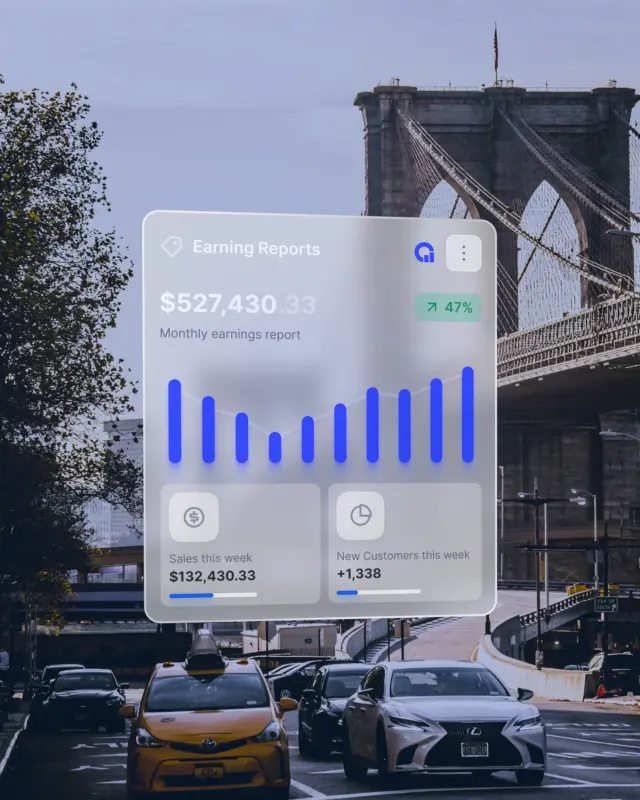
If you only optimise acquisition, you end up paying more for the same customers. We build lifecycle systems that raise retention and expansion, using email, SMS where relevant, and CRM workflows that feel personal without being creepy. We set up segmentation based on behaviour and value, then design flows for onboarding, activation, replenishment, win-back and referral. In practice that can include RFM modelling for ecommerce, lead scoring for B2B, or product usage triggers for SaaS. We also help you capture first-party and zero-party data with preference centres and progressive profiling, so targeting stays resilient as privacy changes. When we ran a lifecycle audit for one team, we found revenue sitting in overlooked moments, like post-purchase education and renewal risk signals. The outcome is a healthier blended CAC and a marketing engine that keeps paying you back.

Measurement you can trust and use

Attribution arguments waste time and block good decisions. We set measurement up so it is good enough to guide spend, creative and roadmap choices, and we are honest about what is knowable. Tracking work can include GA4 hygiene, conversion event design, server-side tracking where appropriate, and consistent UTMs. Reporting lives in a real-time dashboard, with views that match how you run the business, such as channel performance, funnel conversion, cohort retention and creative learnings. We also use incrementality thinking where it matters, like geo holdouts or controlled tests for bigger budget shifts. For example, if brand search rises after a video push, we look at the whole picture rather than declaring victory based on last click. The outcome is faster iteration and fewer surprises in board meetings.

Operating rhythm, SLAs and ways of working

Good marketing is mostly good operations. We set a working rhythm that keeps delivery moving and prevents strategy decks from becoming a comfort blanket. You get a named lead, specialist channel owners, and access to top-tier US and UK talent, scaled up or down based on your needs. We agree response times, approval flows and who owns what across creative, landing pages, tracking and budget changes. Campaign planning happens in short cycles, with clear priorities and a shared backlog, so work does not disappear into a black box. We also help your internal stakeholders, like product, sales and finance, stay aligned with what marketing is doing and why. The outcome is a calm, consistent cadence, less context switching, and a team that behaves like your internal staff while staying on a monthly rolling basis.

Why Growthcurve

Growthcurve is built for teams who want senior thinking and fast delivery without the overhead of building it all in-house. Our marketers have scaled startups to nine-figure valuations, and our clients have raised over $700M in funding, so we understand what investors and boards look for. You get a complete marketing department in one package, with specialists who integrate as your internal staff and can scale up or down as priorities change. We are an official Meta, Google, TikTok and Snap agency partner, and we have a deep creative engine, including unlimited ad creative production, because most growth ceilings are creative ceilings. You also get a proprietary suite of AI marketing tools and a real-time performance dashboard to keep decisions grounded. No long-term contracts, no commission fees on ad spend, just accountable work on a monthly rolling basis.

Book a call

Let's chat about your goals and whether we're a fit.

  1. 1 ABOUT YOU
  2. 2 YOUR NEEDS
  3. 3 BOOKING
I agree to the Privacy Policy

Which of our services do you need?

Type

Size

Funding

We'll email you shortly
Prefer to call now?
USA
+1 (347) 657 3386
UK
+44 203 870 3186