Startup Marketing Agencies Built for Speed and Learning
Get a senior growth pod that ships weekly tests across channels, with clear prioritisation and outcome-led reporting.
What startup marketing agencies do
Startup marketing agencies help early-stage teams go from sporadic traction to a repeatable growth system. That usually means full funnel work: positioning and messaging, demand capture through paid search and paid social, compounding demand through SEO and content, and conversion rate optimisation so you do not waste clicks. The best agencies also handle lifecycle, because retention and activation determine how much you can spend to acquire. The focus is learning fast and protecting burn.
Demand capture and paid growth
Launch paid search and paid social with fast creative testing and clear guardrails. We optimise to CAC and payback, then scale only when tracking and conversion quality are proven.
Compounding channels like SEO
Build topical content clusters and fix technical SEO so you capture existing demand and reduce dependency on paid. This supports long-term efficiency as budgets and competition change.
CRO and lifecycle retention
Improve activation and retention with landing page tests, onboarding flows, and nurture sequences. Better conversion and LTV let you buy growth more confidently without inflating spend.
What we optimise for
- Lower CAC and wasted spend
- Higher conversion and activation
- Improved retention and LTV
The pod model for startups
Most startups do not fail because they cannot run ads. They fail because execution is slow, learning is inconsistent, and nobody owns the whole funnel. Our pod integrates like internal staff and runs weekly sprints across performance, creative, CRO, analytics and lifecycle. You can scale resources up or down as priorities move, without relying on unreliable freelancers. There are no long-term contracts and we do not take commission on your ad spend, so incentives stay aligned.
Faster than building in-house
Get senior specialists immediately, without waiting through hiring cycles. Work runs in parallel across creative, media, and conversion, so you learn and iterate faster week to week.
Full marketing department coverage
Strategy, performance, creative, analytics, and lifecycle come as one coordinated team. This prevents channel silos and keeps every initiative tied to measurable funnel outcomes.
Flexible scope as you scale
Increase creative throughput when testing, shift capacity into CRO when traffic grows, or focus on retention when acquisition costs rise. You avoid fixed headcount while keeping momentum.
Measurement built for early teams
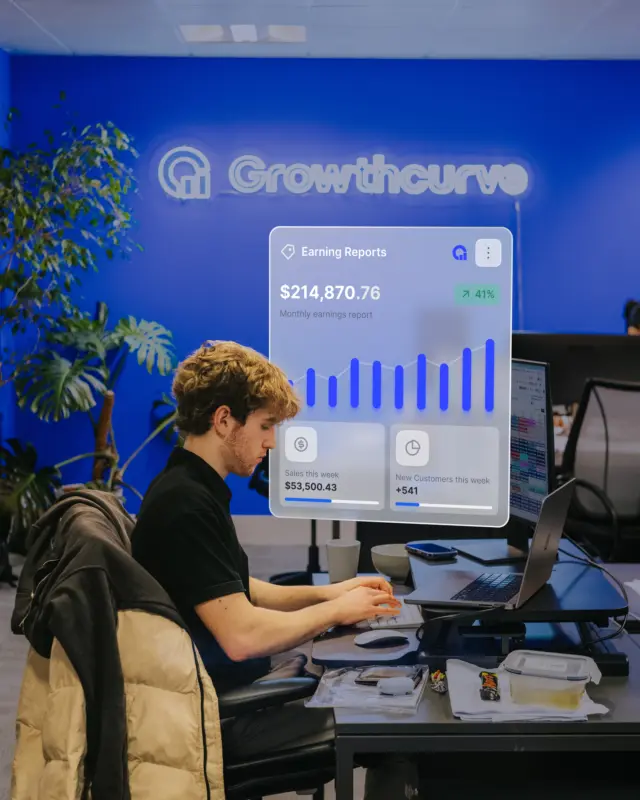
Startups often make decisions with partial data: messy UTMs, unclear conversion events, and dashboards that do not match reality. We implement practical foundations so marketing is measurable and repeatable. That includes clean GA4 events, consistent conversion definitions, and a dashboard that connects spend to pipeline or revenue. As privacy constraints increase, we focus on first-party data and consistent tracking patterns, so your reporting remains useful and optimisation stays evidence-led.
Clean tracking and UTMs
Standardise UTMs and key events so paid, SEO, and lifecycle reporting agrees. This reduces debate and prevents optimising budgets based on conflicting numbers.
Cohorts and funnel visibility
Track conversion by stage and cohort to see quality over time. This helps diagnose funnel leakage and shows whether changes improve payback, not just click metrics.
Dashboards that drive decisions
Use a real-time dashboard plus weekly commentary on what shipped and what moved. Stakeholders stay aligned and you can prioritise based on evidence, not instincts.
How we run experiments
- Backlog scored by impact
- Weekly shipping and reviews
- Clear scale or stop decisions
SEO that compounds, not a checklist
Organic growth is a mix of technical hygiene, content that earns clicks, and authority building that is genuinely deserved. We treat SEO as a product, with a backlog and a cadence, rather than a one-off project. Technical work covers crawlability, site architecture, Core Web Vitals, schema markup and index management. On-page work is driven by search intent and the real questions buyers ask at each stage. Off-page focuses on link earning through useful assets, partnerships and digital PR rather than spam. For example, for a B2B brand we might build a set of comparison pages for demand capture, a small research piece to earn links, and a library of problem-led articles that support sales calls. The outcome is more qualified traffic, better brand credibility, and lower dependency on paid media over time.
How to choose well
- Senior operators, not juniors
- Clear cadence and ownership
- Incentives aligned to efficiency
Lifecycle marketing that increases LTV
If you only optimise acquisition, you end up paying more for the same customers. We build lifecycle systems that raise retention and expansion, using email, SMS where relevant, and CRM workflows that feel personal without being creepy. We set up segmentation based on behaviour and value, then design flows for onboarding, activation, replenishment, win-back and referral. In practice that can include RFM modelling for ecommerce, lead scoring for B2B, or product usage triggers for SaaS. We also help you capture first-party and zero-party data with preference centres and progressive profiling, so targeting stays resilient as privacy changes. When we ran a lifecycle audit for one team, we found revenue sitting in overlooked moments, like post-purchase education and renewal risk signals. The outcome is a healthier blended CAC and a marketing engine that keeps paying you back.
Measurement you can trust and use
Attribution arguments waste time and block good decisions. We set measurement up so it is good enough to guide spend, creative and roadmap choices, and we are honest about what is knowable. Tracking work can include GA4 hygiene, conversion event design, server-side tracking where appropriate, and consistent UTMs. Reporting lives in a real-time dashboard, with views that match how you run the business, such as channel performance, funnel conversion, cohort retention and creative learnings. We also use incrementality thinking where it matters, like geo holdouts or controlled tests for bigger budget shifts. For example, if brand search rises after a video push, we look at the whole picture rather than declaring victory based on last click. The outcome is faster iteration and fewer surprises in board meetings.
Operating rhythm, SLAs and ways of working
Good marketing is mostly good operations. We set a working rhythm that keeps delivery moving and prevents strategy decks from becoming a comfort blanket. You get a named lead, specialist channel owners, and access to top-tier US and UK talent, scaled up or down based on your needs. We agree response times, approval flows and who owns what across creative, landing pages, tracking and budget changes. Campaign planning happens in short cycles, with clear priorities and a shared backlog, so work does not disappear into a black box. We also help your internal stakeholders, like product, sales and finance, stay aligned with what marketing is doing and why. The outcome is a calm, consistent cadence, less context switching, and a team that behaves like your internal staff while staying on a monthly rolling basis.