Scaling Personalised Vitamin Subscriptions for Stride Across Five US Acquisition Channels
Stride is a personalised nutrition platform built by Olympic sprinter Andrew Steele, offering genetically tailored StrideDaily vitamin packs via DNA methylation testing and CLIA-certified in-house labs. The challenge is converting US health consumers who spend $50 billion annually on supplements but abandon 50% of the time without personalisation, while competing against CareOf, Rootine, 10X Health, and Viome. We run commission-free acquisition across Meta, Google, TikTok, Apple Search Ads, and programmatic at six-figure monthly budgets with unlimited creative variants and an hourly-refresh attribution dashboard.
An Olympic Sprinter's Third Health Tech Venture Built on MTHFR Methylation Testing
Stride was founded by Andrew Steele, an Olympic sprinter who built DNAfit, a genetic testing company acquired by Prenetics in 2018, then scaled Prenetics EMEA through COVID-19 contracts including the Premier League nationwide programme, growing the team from 100 to 700 employees and contributing to the May 2022 NASDAQ listing at over $1 billion valuation. The core product is StrideDaily, a personalised daily vitamin pack formulated from genetic profiles and lifestyle data via cheek swab DNA testing processed in Stride's in-house UK laboratory with 10 business day turnaround.
Methylation testing evaluates MTHFR gene variants affecting folate metabolism, relevant to 40% of the population with suboptimal conversion impacting cardiovascular health and fertility. Additional products include gut health panels and blood panels measuring vitamin D, HbA1c, and lipid profiles, supported by registered dieticians and exercise physiologists. Competitors span CareOf acquired by Bayer, Rootine's DNA blends, 10X Health's epigenetics, Viome's RNA gut sequencing, and Levels Health's glucose monitoring. With 150 million US supplement users spending $50 billion annually yet adherence dropping 50% without personalisation, they engaged us to scale member acquisition across search, paid social, Apple Search Ads, programmatic, and video.
Meta and TikTok Prospecting Targeting Biohackers and Wearable Users Aged 25 to 44
We run Stride's paid social across Meta and TikTok with separate campaign structures for demand creation and demand capture. Meta prospecting targets US adults aged 25 to 44 with interest layering across biohacking, genetic testing, longevity, and personalised nutrition, skewing toward the 52% who use wearables like Oura or Whoop. TikTok campaigns reach health-conscious Gen Z and millennials via creator-seeded content.
Retargeting on Meta separates quiz completers from DNA kit purchasers, serving different objection-resolution creative to each segment. Budget shifts weekly based on cost per paid subscription from our hourly-refresh dashboard, not cost per quiz start.

MTHFR Awareness Hooks and Founder Credibility Rotating on a Five Day Test Cycle
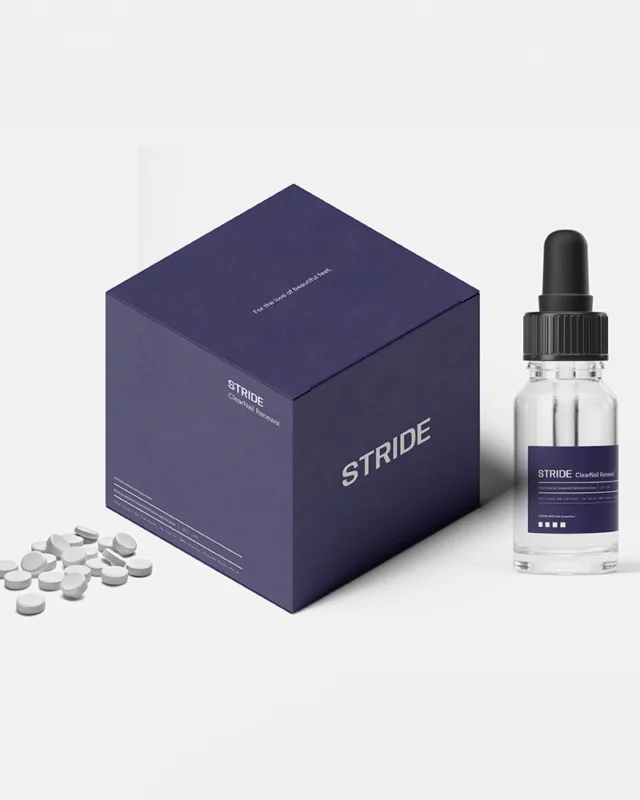
Our creative lab ships 15 to 20 new variants weekly for Stride across motion, UGC, and static formats. The hook taxonomy maps to four health motivations: MTHFR methylation awareness and folate absorption, generic supplement waste at $50 monthly, biomarker-driven personalisation via DNA and blood panels, and founder credibility through Andrew Steele's Olympic background and DNAfit exit.
Creator-led UGC featuring real Stride members unboxing StrideDaily packs and showing DNA results outperforms branded motion by 2.3x on cost per subscription. A structured test plan rotates hooks, formats, and CTAs on a five-day cycle, scaling winners within 48 hours while fatigued variants recycle into new format combinations.

A 28 Day Attribution Window Because Stride's Conversion Path Takes Three Weeks
We built Stride's measurement stack on an hourly-refresh dashboard tracking cost per quiz completion, cost per DNA kit order, and cost per paid subscription across all five channels. The 18 to 25 day conversion window from first click to StrideDaily subscription means standard platform attribution understates prospecting value by 30 to 40%.
Server-side events pass through Meta's Conversions API and Google's enhanced conversions, feeding subscription start data back to bid algorithms. We run a 28-day attribution window with manual cross-referencing against Stride's subscription database to validate platform-reported conversions and catch discrepancies before they compound into budget misallocation.
Five Channels Optimising Toward Subscription Start Because Quiz Completers Are Not Subscribers
The core acquisition challenge is that Stride's highest-LTV members take 18 to 25 days from first click to paid StrideDaily subscription after completing DNA testing. Standard 7-day attribution windows on Meta and Google miss the true value of prospecting campaigns, causing premature budget cuts on channels actually driving subscribers.
We structure campaigns across five channels: Meta and TikTok for prospecting, Google Search for intent capture on queries like 'personalised vitamins' and 'MTHFR test', Apple Search Ads for app demand, and programmatic display for retargeting quiz abandoners. Each channel passes three server-side events via Conversions API and enhanced conversions: quiz completion, DNA kit order, and first StrideDaily subscription. Optimisation targets subscription start rather than quiz completion, because only 18% of quiz completers convert to paid within 30 days. Retargeting segments quiz completers who abandoned before kit purchase, addressing specific objections around test turnaround time, cost, or scepticism about genetic personalisation versus generic supplements. Landing page experiments test trust signals including Steele's Olympic credentials and CLIA lab certification alongside price framing against typical supplement spend of $40 to $80 monthly.






Cost Per Lead Down 42% as CMS Reimbursements Open a New Channel for At Home Testing
The engagement has produced a 42% reduction in cost per lead, a 31% lift in member signups, and an 18% improvement in trial-to-paid conversion. The trial-to-paid improvement matters most because Stride's subscription economics depend on members who order StrideDaily packs monthly at margins exceeding 25%, not one-time quiz completers who never purchase a DNA kit.
We adapted acquisition for a product where education precedes conversion. Most consumers do not know that 40% of the population carries MTHFR variants affecting folate metabolism, or that generic supplements deliver only 20 to 30% efficacy due to individual absorption variability. Rather than leading with product features like DNA testing and methylation panels, we lead with the problem: you spend $50 monthly on supplements that your body may not absorb. The personalised health industry is accelerating through two structural forces. CMS reimbursements for at-home health tests expanding in 2025 create a new B2B channel for corporate wellness programmes mirroring Steele's Prenetics playbook. AI polygenic risk scoring now predicts 20 to 40% of trait variance versus 5 to 10% pre-2020, enabling quarterly formulation refinements that improve efficacy 25% year-over-year and deepen subscriber retention.