

FaZe as a marketing channel
FaZe Clan is easiest to understand if you stop treating it like a traditional media company and start treating it like a distribution surface that happened to incorporate. They did not buy attention and then rent it out. They produced attention directly, inside the platforms where their audience already lived, and then sold access to that attention through sponsorships, merchandise, and occasional competitive success. That distinction matters because it explains both the upside and the fragility. A broadcaster can swap programming slates, reprice ad inventory, and still function. A creator-led organisation is different. Its product is trust, taste, and status inside a subculture. Once you have that, the monetisation options can look endless, branded content, apparel drops, collaborations, even a public listing. Once you lose it, the economics collapse in a very specific order: consumer products go first, then platform revenue softens, then sponsors get nervous, then the balance sheet catches fire. FaZe briefly looked like the future because it felt native. It came up through Call of Duty and Halo trick-shot videos on YouTube, not through a corporate go-to-market plan. It learned the internet's distribution rules early, consistency, personality, in-jokes, and community participation, and it treated brand as something fans co-authored rather than something executives declared. The question worth asking is not "why did FaZe fail" but "what exact marketing machine did it build, and what exact incentives broke that machine once it tried to become a public-market story". If you are building a creator business, the mechanics here are uncomfortably relevant.
Fandom first monetisation later
The business model that brands actually bought
The content house as a growth system
Turning community into commerce
At its peak, FaZe pushed beyond being "an esports team" and positioned itself as a lifestyle brand. Apparel is not just a revenue line in that model. It is identity commerce. The shirt is the media. This is why collaborations matter. A named collaboration like Takashi Murakami is not primarily about units sold. It is about signalling that the brand belongs in a wider cultural conversation. When you do that successfully, you expand the total addressable audience without losing the core audience, and you give sponsors a reason to pay more because you look like culture, not like inventory. The flywheel is powerful when trust is high. Fans buy merch to signal identity, the merch in public recruits new fans, sponsors pay to be adjacent to that identity, and the money funds more creators and more content. It is the same compounding logic that made streetwear work, but with YouTube as the distribution layer. The brittle part is that commerce is the most sensitive trust indicator. People will still watch content from someone they are disappointed in. They will not wear the logo. When a creator-led organisation starts slipping, consumer products almost always show it first. In FaZe's story, the later merch collapse is not a random financial detail. It is the clearest signal that the identity loop broke, and once that happens, the rest of the monetisation stack becomes a negotiation rather than a pull.
SPAC incentives and scale theatre
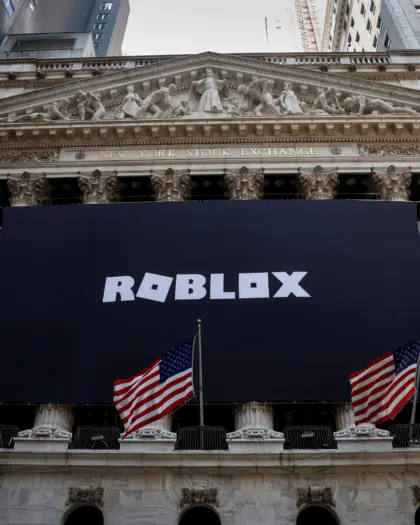
FaZe went public via a SPAC on July 20, 2022 at a widely reported headline valuation of $725 million. Public listings change the incentives of any business, but they are especially corrosive for businesses whose primary asset is cultural coherence. In the SPAC era, the market rewarded the appearance of growth, sometimes more than the quality of it. The posture after the deal was "growth at all costs", and one visible expression was rapid roster expansion. The criticism is that standards dropped, including signing creators pulling only a few thousand views per video. Whether or not every signing fit that description, the underlying risk is real. In an identity-based brand, quality control is the product. When you scale headcount faster than you scale belief, you dilute the signal that made you valuable. There is also a mechanical issue. Sponsors do not pay for your staff count. They pay for engaged reach and brand-safe association. If expansion lowers engagement rates, you do not just lose revenue, you lose pricing power. This is the trap of scale theatre. The organisation can point to more creators, more teams, more announcements, while the attention per creator declines and the audience starts to feel the brand is less special. FaZe also announced layoffs of roughly 20% of staff in early 2023, which is what happens when a public story meets operating reality. In creator businesses, the moment you start optimising for financial narratives over audience narratives, you usually end up breaking both.
When sponsorship becomes the product
Sponsorship is not inherently a problem. In esports and creator-led media, sponsorship has historically been the biggest revenue pool across the industry. The problem is what happens when sponsorship stops being the monetisation of culture and becomes the culture itself. One move was loading merchandise with sponsor logos as a way to drive sponsorship revenue. That is a perfect example of how a growth team can accidentally convert a brand into a media unit. Fans do not mind a sponsor when the sponsor funds the thing they love. They do mind when the thing they love starts to look like it exists to serve the sponsor. This is where brand and creator tensions show up. Sponsors want scale, consistency, and brand-safe ROI. Fan communities want authenticity and a sense that the relationship is reciprocal. Ads need to feel earned, not imposed. If the audience starts describing the organisation as a soulless corporation extracting money from fans, you have a distribution problem, not a PR problem. The other hidden downside is sponsor dependency. When sponsorship becomes the primary lever, every controversy becomes a revenue threat, every platform shift becomes a renegotiation, and every macro downturn becomes existential. A healthy creator business uses sponsorship as a layer, not as the foundation. In FaZe's case, the revenue mix shift in 2022 and the steep deterioration in 2023 suggest the business ended up leaning on the least durable part of the stack at exactly the wrong time.
The numbers that show the loop breaking
You can watch the business model bend in the year-over-year changes. In 2022, sponsorship revenue was up 69% while direct YouTube or platform revenue was down 10% and consumer products revenue was down 40%. That is the shape of a company replacing fan-led monetisation with brand-led monetisation. It can work for a while, but it usually lowers long-term resilience. It gets more severe in 2023. Figures in the collapse narrative include Q1 revenue down 41% year-over-year, followed by another 7% decline in the next quarter. First-half revenue was $24 million versus an earlier investor presentation expectation of roughly $200 million for full-year 2023. Even allowing for the fact that investor decks can be optimistic, that is a miss large enough to change the entire operating posture. The most telling single number is the consumer products collapse of more than 90%, down to around $25,000 in Q2 2023. That is not "merch is soft". That is "identity commerce is gone". When fans stop buying, sponsors start questioning whether they are paying for real persuasion or just for logo adjacency. The balance sheet pressure shows up too, including reports of about $21 million cash on hand, a NASDAQ delisting notice, and roughly $14 million in losses across the first two quarters of 2023. 2022 annual revenue numbers I could find were between $70 million and $138 million. You do not need perfect agreement on the top line to see the underlying pattern. The unit economics of trust were deteriorating faster than the company could replace them with scale.
The hard lesson for creator-led media
Controversy in creator businesses is not a comms event, it is a balance-sheet event. The June 2021 Coffeezilla allegations around a crypto pump-and-dump involving FaZe Kay and others became a brand-safety shock that lingered. FaZe fired Kay and suspended two other members, but the deeper issue is that once trust is questioned, every sponsor contract becomes harder to renew and every mainstream partnership carries more internal risk for the brand. Internal creator friction compounds the problem. When prominent members publicly argue that the organisation takes a massive cut of their YouTube and sponsorship revenue while providing little value, the audience does not hear "contract dispute". They hear "the thing I loved is now exploitative". That is fatal when your marketing engine is parasocial trust. FaZe is still a useful map for anyone building in the creator economy. The prototype is real: community-first IP, creator-native distribution, sponsorship monetisation, merch as identity commerce, lifestyle positioning to command premium partnerships. The warning is also real: once you optimise for public-market optics, you often end up over-expanding, over-commercialising, and under-protecting the one thing you cannot buy back quickly. My view is that the next generation of creator-led media companies will look less like SPAC-era rollups and more like tightly governed creator cooperatives with ruthless brand standards. The winners will choose smaller rosters, fewer but deeper partnerships, and boring financial discipline. If you cannot say no to bad inventory, you are not a media company. You are an attention wholesaler waiting for your CPM to collapse.