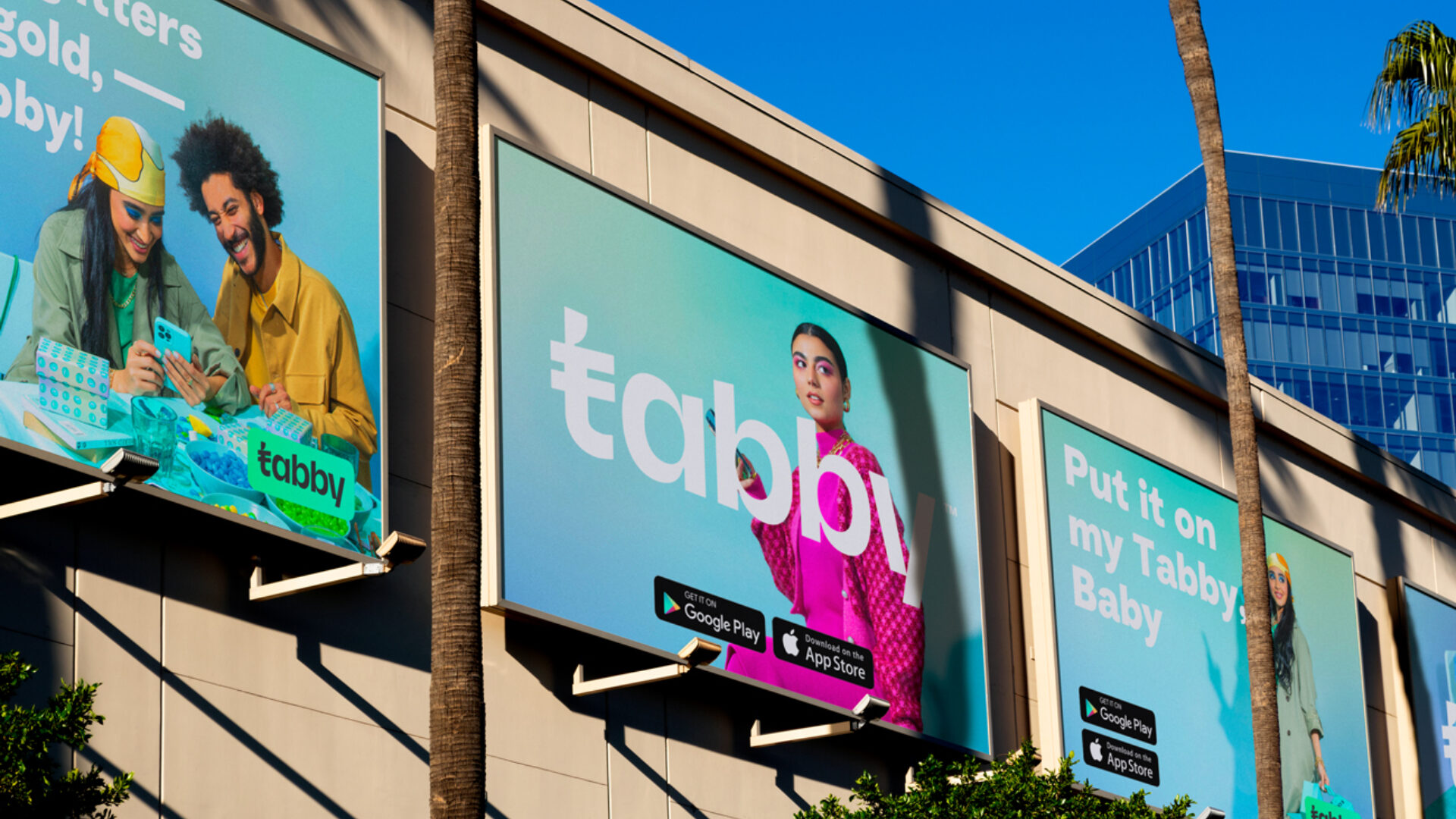

Reframing BNPL as budgeting not debt
In fintech, language is not decoration. It is the product you are actually selling in the first 10 seconds. Tabby understood that in the Gulf, the average shopper is not looking for another credit product and many shoppers are actively cautious of anything that smells like revolving debt. So the category move was to make BNPL feel like planning, not borrowing.
The front door promise, repeated everywhere it matters, was simple and legible, zero interest and zero hidden fees. That sounds like copywriting, but it is really risk removal. If you operate in a trust fragile environment, you win by subtracting perceived downside before you attempt to add perceived upside. The promise also turns every subsequent surface area into a reinforcement mechanism, checkout copy, order confirmations, payment reminders and app screens all become reassurance that this is predictable and controlled.
The clever part is how this reframing changes the mental model at the moment of purchase. Four payments feels like a budgeting tool because the maths is easy and the end date is near. It behaves more like splitting a bill than taking on a loan. A zero interest 4 instalment plan is not just a pricing construct, it is a psychological construct, especially for high frequency purchases where the shopper wants flexibility without committing to months of repayments.
If you are building in a similar category, the operator lesson is to design your positioning around the most common fear, not the most exciting benefit. For BNPL the fear is hidden cost, debt spiral, and fine print. If you address those explicitly and repeatedly, you make the rest of the funnel cheaper because you have lowered the baseline suspicion before you ever try to optimise conversion.
Trust is the funnel and UX is the creative
In many markets you can compensate for weak trust with aggressive incentives or heavy retargeting. In fintech, and especially in BNPL, that tends to backfire because shoppers interpret friction and complexity as danger. Tabby treated clarity as performance marketing.
The product experience avoided heavy financial jargon and kept flows simple. That is not a design preference, it is message discipline expressed through interface. When the main conversion barrier is uncertainty, every extra field, every unfamiliar term, every ambiguous fee line item acts like a tax on conversion. If you have worked with payment products, you know the pattern, the best growth teams obsess over microcopy because microcopy is where trust is either reinforced or broken.
This is also why Tabby could lean so hard on merchant distribution. If the on site experience is clean, the merchant is more willing to give you premium checkout real estate. Merchants do not want support tickets, chargeback headaches, or confused customers. A low drama UX becomes a B2B sales asset.
A practical tactic here is to treat your entire customer journey as a single trust narrative and test it like you would test ads. The tests are not always about conversion rate in isolation, they are about perceived safety. You can do this by running usability sessions where you measure comprehension, not satisfaction, and by instrumenting where users hesitate, not only where they drop. If your proposition is transparency, then your screens and emails must read like transparency.
The deeper point is that in categories where trust is fragile, brand and product are the same team. The brand promise is only believable if the UI behaves in a way that matches it. Tabby built marketing into the product, and that is why so much of its growth looks like distribution rather than a pile of campaigns.
Localization that widens eligibility
Most companies talk about localization as translation, compliance, and a few country specific creatives. Tabby treated localization as a growth lever because it shaped who could even participate. In the Gulf, a key reality is that a meaningful portion of consumers do not behave like classic credit card shoppers. If your BNPL product assumes credit cards as the default, you are shrinking your addressable market before you even start.
Tabby expanded the top of funnel by meeting consumers where they already are, enabling use via debit cards or linked accounts. That is a distribution decision disguised as a payment method choice. It makes the product available to shoppers who would otherwise be forced into cash on delivery or bank transfer style flows.
The second localization move was cultural rather than technical. Cash on delivery is not just a payment preference, it is a trust mechanism. It says, I will pay when I see it. BNPL can feel risky if it is framed as credit, but it becomes intuitive if it is framed as a safer, more convenient COD like experience with predictable repayments. You are not asking the shopper to adopt a foreign behaviour, you are giving them a modern version of an existing one.
Short instalment cycles matter here. Often capped at four payments, the structure reduces perceived commitment and makes it harder for the product to be mentally filed under long term debt. It also makes the promise of no hidden fees easier to believe because the timeline is short and the repayment schedule is easy to remember.
If you are building in fintech, the strategic lesson is to treat local payment habits as product requirements and marketing assets simultaneously. The fastest route to scale is not persuading a market to behave differently. It is packaging your product so it feels like the natural next step from how people already buy.
Merchant partnerships as compounding distribution
If you go looking for Tabby campaigns, you will mostly find systems. The core acquisition channel was not a media plan, it was merchant led distribution. This is a classic fintech play when the product lives at checkout and when trust is easier to borrow than to manufacture.
Tabby partnered with globally recognisable retailers like IKEA, H&M, Adidas and Shein, alongside hundreds of local merchants. Every marquee logo functions as a credibility anchor for two audiences at once. For consumers it reduces perceived risk at the moment of payment. For the next merchant it answers the unspoken question, who else trusts you. In the Gulf, where fintech trust is not evenly distributed, borrowed credibility is a powerful accelerant.
This is where growth loops show up. Each new high quality merchant increases consumer exposure. Increased consumer familiarity increases conversion at other merchants. Higher conversion and average order value makes the merchant case stronger, which makes onboarding the next merchant easier. You do not need a viral loop in the product when you have a distribution loop across merchants.
Partnership led distribution also changes the unit economics logic. A significant amount of demand is generated inside the merchant journey, rather than from Tabby paying to acquire every user from scratch. The user discovery moment happens at the most valuable point in the funnel, right as they are about to spend.
If you are an operator evaluating a similar strategy, look for two things. First, can your product create a measurable outcome for the merchant quickly. Second, can you package the integration and co marketing so that adding you feels like a revenue lever rather than a project. Tabby made merchant adoption part of the marketing engine, not a separate workstream.
Checkout is the highest intent ad unit
BNPL has a structural advantage that most consumer apps would pay for. The decision happens at checkout, which is the moment of maximum intent. That means the retailer placement is not just a badge, it is always on performance inventory. You do not need to win the click first because you are already inside the transaction.
This is why Tabby could convert partnerships into growth without leaning on named campaigns. The real ad unit was the payment option itself, presented when the customer is already mentally committed to the purchase but potentially constrained by cashflow or payment preference. If you have run e-commerce funnels, you know the difference between getting someone to browse and getting someone to pay. Tabby lived in the second moment.
A practical mechanism is simple, make the value proposition visible before the customer hits the payment step, then reinforce it again at payment selection. Many merchants bury payment options until the end, which limits the lift. The best implementations treat BNPL messaging as part of merchandising, for example displaying an estimated instalment amount on product pages or in cart. The language must remain consistent with the trust promise, so any mention of instalments should sit next to clear statements like zero interest and no hidden fees.
This also reduces cart abandonment for a predictable reason. When a shopper hits checkout and realises the total is higher than they are comfortable paying today, they pause. A four payment option reframes the total into a smaller near term commitment. That does not create demand out of nowhere, it prevents high intent demand from leaking.
If you want to copy this dynamic, you need to design for merchant surfaces, not just your own app. In checkout native products, distribution is a product feature. Tabby treated it that way.
Selling the merchant on outcomes not features
Tabby did not have to convince merchants that BNPL is interesting. It had to convince them that adding Tabby is worth prioritising versus every other revenue project on the roadmap. That is a different kind of marketing, it is B2B performance storytelling backed by merchant economics.
The merchant narrative is straightforward and familiar to any e-commerce GM, higher conversion rates, lower cart abandonment, increased average order value, and more repeat purchases. The most concrete number provided is that retailers using Tabby see average order values increase by 33%. You do not need to oversell beyond that, because a credible AOV lift is already a board level metric for many commerce businesses.
What matters is how you operationalise that promise. AOV lift does not appear automatically because a payment button exists. It tends to show up when the BNPL option is surfaced early enough in the journey, when eligibility checks are fast, and when the shopper feels safe that they will not be punished by fees. That brings us back to the trust framing. The B2C promise is also the B2B retention mechanism, because if users feel tricked, merchants see higher support burden and lower repeat usage.
Merchants also need a clean mental model of what success looks like. The best partner teams define a short set of success metrics, conversion rate on orders exposed to BNPL, share of checkout selects, AOV delta, repeat rate among BNPL users, and then run a tight cadence of optimisation with the merchant. In practice that means improving placement, simplifying messaging, and tightening friction points.
The takeaway for growth teams is to treat your merchant pitch as a performance product. If you can sell outcomes in the language merchants already use, your distribution becomes more resilient than any single paid channel.
Scale and funding as credibility mechanics
In trust sensitive categories, scale is not just an internal metric. It is external reassurance. Tabby is described as processing millions of transactions and being adopted by thousands of retailers across the Gulf, including the UAE and Saudi Arabia. Those claims act like social proof for both sides of the market, consumers feel safer installing and using a product that appears widely adopted, and merchants feel safer integrating a provider that looks established.
Funding rounds can function the same way. Tabby raised a $7M seed in 2020, then a $50M Series B in 2021 led by Global Founders Capital and STV, then $150M in 2022 pushing valuation near $1B, then a $200M Series D in late 2023 led by Wellington Management reaching a $3.3B valuation. In February 2025 Tabby raised a $160M Series E led by Blue Pool Capital and Hassana Investment Company, maintaining the $3.3B valuation, and in October 2025 a secondary sale valued the company at $4.5B.
You can argue that funding is not marketing. In fintech, I think that view is naive. Institutional validation reduces perceived counterparty risk. It also helps partnerships close faster because merchants and processors want to know you will be around for the next contract term.
There is also a category signal. In 2024, Tabby, Tamara and valU together held 71.9% market share of the Middle East and Africa BNPL market. Even shared dominance matters, because it tells the ecosystem, merchants, regulators, payment partners, that BNPL is no longer an experiment.
The operator point is to use scale proof carefully. The goal is not to brag. The goal is to reduce anxiety. If your market is trust constrained, credible proof points can replace discounting as your primary persuasion mechanism.
What is missing and what that reveals
One of the most interesting things about Tabby is what you do not hear much about, at least in the materials at hand. There is no detailed paid media playbook, no named influencer programme, no big offline activation narrative, and very little discussion of funnel metrics like CAC or retention. That absence does not mean those things do not exist. It suggests they were not the primary drivers worth emphasising.
In other words, Tabby is a case where growth likely came from structural distribution advantages rather than media sophistication. When you sit in checkout, you can acquire users at the moment of purchase. When you partner with merchants, you can scale exposure without paying for every impression. When your product promise is legible, users are less likely to drop during onboarding. Those are all durable levers.
It also implies something about organisational focus. Teams that win with merchant led distribution tend to invest heavily in BD, integrations, partner success, and merchant marketing kits. They obsess over reliability and speed because the merchant cares about uptime and frictionless checkout more than brand storytelling. Marketing becomes cross functional, it includes sales enablement, lifecycle comms, product copy, and partner co marketing.
The competitor set reinforces this. Tamara is a major GCC competitor, while valU is dominant in Egypt with over 5,000 merchant outlets. If you are in a market where a few players share most of the category, your differentiation has to be built into the system, merchant coverage, trust, and conversion performance, not just your top of funnel creative.
The practical lesson is to be honest about what actually moves your growth. Many fintech brands waste time copying surface level tactics from consumer apps. Tabby looks like it invested in the boring parts that compound, partner distribution, product clarity, and trust mechanics embedded into every touchpoint.
The loop that competitors will struggle to copy
If you map Tabby into a system, you can see why it compounds. A trust first promise, zero interest and zero hidden fees, makes users comfortable trying it. A simple UX with minimal jargon reduces drop off. Local payment compatibility brings more people into the funnel. Short instalment design, often four payments, keeps the commitment psychologically safe. Merchant partnerships put the product where intent is highest. Checkout placement converts. Better merchant economics create stronger merchant advocacy. Scale and funding milestones reduce risk perception further and open more partnership doors.
That loop is hard to copy because it is not a single tactic. A competitor can match pricing or run heavier ads, but matching the flywheel requires doing several things at once. You need credible merchant logos, a product experience that does not create support burden, underwriting and eligibility that works in the local context, and a partner team that can repeatedly prove outcomes like conversion lift and AOV lift. If Tabby is delivering 33% average order value uplift for retailers, that becomes a wedge in every sales conversation and a reason for merchants to give them better placement.
The partnerships announced in 2025 also show the direction of travel. A Checkout.com partnership for UAE and Saudi Arabia, and local integrations like Menakart in the UAE, point to continued investment in infrastructure and distribution surfaces. Those are not flashy growth moves, but they are the sort that increase reliability and reach.
My hard opinion is that the future winners in MENA BNPL will not be the brands with the most memorable ads. They will be the ones that turn merchant distribution into a defensible network, where each new integration makes the product more trustworthy and more visible. In 2026 and beyond, I expect BNPL to be marketed less like a consumer finance product and more like commerce infrastructure. If you cannot win on embedded distribution and trust mechanics, you will be forced into paid acquisition arms races that rarely end well in fintech.