

Buying installs is a 2015 strategy
If you're still running mobile growth like it's a volume game, buy the install, hope the product does the rest, you're competing in a market that restructured around you while you weren't looking. CPIs are higher across every major platform, retention benchmarks are brutal, and the average user has enough apps on their phone that yours needs to earn a habit on the first session or it's gone within a week. The teams that thrive in this environment don't add more channels. They build tighter systems. The apps that compound growth now run a closed loop, market insight feeds creative, creative drives store conversion, store conversion flows into onboarding, onboarding builds retention, and retention data loops back into insight. Every link in that chain is a growth lever, and the strongest teams pull all of them deliberately, every week. Look at how the best-performing app teams have evolved over the past few years and the progression is obvious. In 2023 and early 2024, the dominant moves were pre-launch buzz and influencer-driven installs, micro-influencer teases that delivered around 40% more downloads at launch for apps that did it well. Then 2025 added a new layer, OEM partnerships on Samsung, Xiaomi, and Huawei launchers reaching roughly 1.5 billion users at the moment of device activation, retention events built directly into App Store and Google Play surfaces, and behaviour-triggered push sequences targeting users at the 7-day inactivity mark. By early 2026, the teams pulling ahead had stopped thinking in isolated channels and started treating the whole funnel as one integrated system. I'm not saying influencers and paid UA are finished. Every one of those tactics is still on the table. The teams that win are the ones who connect them rather than running them in parallel and hoping the numbers add up.
Your ads and your app are telling different stories
Why do apps with genuinely good products still churn users at a rate that kills the business? In most cases it comes down to a single, fixable problem, the promise the ad makes and the experience the app delivers are not the same promise. Users don't consciously notice the misalignment. They just feel vaguely misled, lose interest faster than they expected, and delete the app without leaving a review. Message transfer, keeping the user's understanding consistent from ad through to first value moment, is where the most growth gets lost. Every major paid creative angle needs a matching store listing, different screenshots, different subtitle, different first two lines of copy. That matching listing then maps to a specific onboarding path that proves the same promise in under 60 seconds. When those three are aligned, you're improving the quality of the user you acquire, not just the conversion rate at one point in the funnel, and that quality improvement cascades directly into retention and lifetime value. Misalignment doesn't just hurt retention. It raises your CPI too, because mismatched users bounce faster and the algorithm reads the signal. Deferred deep linking is another piece of the same logic. Routing a user who clicked an ad directly to the relevant in-app page post-install, rather than dropping them on a generic home screen, is one of those plumbing decisions that never shows up in a creative brief but quietly moves trial-to-paid conversion numbers by meaningful amounts. Store listing variants matched to paid creative angles, deferred deep links matched to those listings, and onboarding flows that cash the specific cheque the ad wrote, put those three together and you've built something most competing apps don't have. The work is mostly invisible when it's done well, which is exactly why most teams skip it.
Why going narrow is the fastest way to go wide
Most early-stage apps try to appeal to everyone and end up converting nobody well. Broad positioning sounds more ambitious, but it actively undermines keyword relevance, store conversion rate, ad click intent, and onboarding clarity, all at once, and all simultaneously. The counterintuitive move is to start with the most specific, unmistakable use case you can credibly own, build real momentum there, and only then expand. Look at how ASO compounds when you take this approach seriously. A tightly focused keyword set in your title and subtitle starts earning genuine ranking before you have the domain authority to compete on broad terms. Airbnb's App Store page is a useful reference point here, it leads with specific, high-intent visual promises in the first screenshots rather than trying to communicate everything the product can do. That discipline earns keyword relevance and conversion rate simultaneously, because the user arriving from search sees exactly what they were looking for. You build momentum in a focused lane, then expand into adjacent intents once you've earned the performance signals to justify it. Broad positioning isn't wrong forever. It's wrong first. The same logic runs through paid creative and store copy. The teams I've seen struggle most are those trying to serve three different user types with one set of screenshots and one onboarding flow. Narrow the promise and click intent improves, activation rate improves, and early cohort retention looks dramatically better, which makes the case for scaling spend far easier to defend. Focused positioning is how you turn ASO from a metadata exercise into an actual acquisition engine, and it's how you give your paid channels the specific, credible promise they need to perform efficiently.
Stop brainstorming creative and start mining reality
The single decision that separates high-performing creative teams from everyone else is where they start the process. Most start with a brief or a brainstorm, a room full of people inventing problems the user might have, debating hooks that feel resonant, and ultimately producing creative that reflects the team's understanding of the user rather than the user's actual experience. The better teams start with something far less glamorous, the raw, unfiltered text of what users write when they're emotional about a problem. That means your app reviews and your competitors' reviews. It means Reddit threads in niche communities where the problem-space conversation is happening without any commercial filter. It can even mean adjacent-market reviews, if you're building a sleep app, the reviews left on sleep books are full of people describing the exact same pain in the exact same language, just without any awareness of your product. AI can cluster that raw material into dominant pain patterns, "why now" urgency signals, specific objections, and the precise phrases people reach for when they're at their most frustrated or hopeful. From that point, ad angles write themselves because they're not angles in the conventional sense, they're mirrors. Creative built from this process doesn't feel like advertising. It feels like someone read the user's mind. The downstream effects show up across the full funnel. CTR improves because the hook sounds like the user's internal monologue rather than a product manager's bullet point. Install rate improves because the promise is specific. And, this is where the real value sits, the cohort you acquire actually matches the product's genuine value, rather than a version of it your team invented in a meeting room. Better-matched users retain longer, and longer retention changes the unit economics of every spend decision you make from that point forward.
Onboarding is your most underrated growth lever
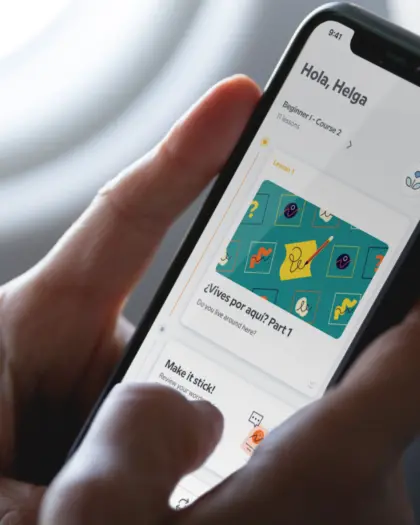
Behaviour-triggered push sequences targeting users at the 7-day inactivity mark have driven 39.6% MAU growth in tracked deployments. That number is striking, but it's pointing at something more fundamental, users who feel understood from the first session stay, and users who feel like they've landed in a generic product don't. Every activation rate, trial start rate, and trial-to-paid conversion figure you're looking at is partially a function of whether your onboarding adapts to the specific person who just arrived, before you need to win them back with a push notification. Hyperpersonalised onboarding doesn't require rebuilding your app from scratch. It starts with 1 to 3 questions that actually change what the user sees, not demographic fluff, but questions whose answers meaningfully alter the first screen of value, the recommended plan, the content feed, or the push notification cadence and tone. When someone who came in searching for stress relief gets an experience tuned to stress relief rather than a generic welcome tour, the gap between "installed" and "converted" closes fast. When someone searching for productivity tools gets routed immediately to the task structure that matches how they described their problem, the first session starts doing retention work before retention has even become a concern. The Calm app's approach of leading preview videos with emotional keywords like sleep and anxiety, before showing a single product screen, is the same principle applied one step earlier in the funnel. Make the user feel understood before you ask for anything. I've watched teams spend months debating onboarding screen aesthetics and almost no time on onboarding logic. The prettiest flow that doesn't prove value in under 60 seconds will lose to an ugly one that does. Route people to their first moment of genuine utility as fast as possible, and everything downstream, activation, trial conversion, day-30 retention, gets easier.
Nobody treats the store page as a retention tool
The default assumption is that the App Store and Google Play are acquisition surfaces. Someone searches, they find you, they install, and then the relationship moves into your app and your lifecycle channels. That framing is understandable and it leaves a significant reactivation opportunity sitting completely unused. In-app events and promotional events on the store surface to users who are browsing even if they already have your app installed. If someone is scrolling the store having not opened your app in two weeks, that is precisely the moment to intercept them with something time-bound and specific. The teams running this well build an events calendar the way a media company would plan editorial... product moments around new feature drops or new content packs, cultural moments tied to New Year, summer, or back-to-school, and behavioural moments aimed at the day-7 slump, the renewal window, or the "fell off the habit" segment. Event creative written with a specific, time-bound outcome in mind consistently outperforms a generic "check out our latest update" post. Used this way, the store becomes a bridge between paid acquisition bursts and organic reopens, not just a gate people walk through once. Layer in gamification, streaks, badges, daily completion mechanics, and you're building habit architecture that makes the reactivation event more likely to stick when someone does come back. Lifecycle email re-engagement flows and coordinated multi-channel sequences across SMS, WhatsApp, and push extend the same logic outward. None of this will ever be the case study your agency leads with in a pitch deck. But these mechanics compound quietly, and over 90 days they change what your D30 and D90 retention curves look like in ways that no single paid campaign can replicate.
When lower install rates actually mean better unit economics
There is a specific panic that runs through performance teams the moment install rate or store conversion starts to dip. Someone flags it in the weekly review, creatives get blamed, budgets get shuffled, and the entire team spends two weeks optimising the wrong variable. Sometimes the rate dropped for entirely good reasons, and chasing it back up would be a mistake. Shifting into older, higher-value audience segments on Meta is a clear example. Those users are harder to convert at the top of the funnel, they take more convincing, they're more sceptical, they don't tap "install" on the first impression. But their downstream value, measured in subscription conversion, average revenue per user, and long-term retention, frequently more than compensates for the lower initial conversion rate. The right question to ask is not "did install rate go down" but "did profit per thousand impressions go up once you include retention and revenue in the calculation." If the answer to the second question is yes, the lower install rate is not a problem, it's evidence the audience mix is improving. Any top-of-funnel metric read in isolation is a trap. If you can't reconcile performance across the full cohort, your measurement design is the bottleneck. OEM partnerships illustrate the same principle from a completely different angle. Placements on Samsung, Xiaomi, and Huawei launchers reach roughly 1.5 billion users at the moment of device activation, before those users have formed strong app loyalty or entrenched habits. The volume is enormous. But teams that win from those placements don't treat them as a direct extension of their Meta creative strategy, they build onboarding and activation logic specific to that audience, because a user who received your app at device setup arrived in a completely different mental context to someone who searched for it.
Growth in 2026 compounds weekly or not at all
The question I get most from app teams is some version of "which channels should we be running in 2026." TikTok for Gen Z, Meta for broad scale, Google for high-intent search, all of those are correct answers and also nearly useless as strategy on their own. A channel is a commodity. What separates compounding growth from flat growth is whether there is a deliberate weekly system behind the spend. The cadence I would install in any app team right now runs across six loops every week, insight mining from reviews, support tickets, community posts, and competitor ads; creative production across hook variants, proof variants, and format variants; store iteration on screenshots, copy, and audience-aligned listing pages; onboarding experiments to shorten time-to-value; retention pushes through events, lifecycle messaging, and winbacks; and cohort-quality measurement that connects traffic source and creative promise to downstream revenue. Each loop feeds the next. A week of insight makes the following week's creative sharper. Sharper creative makes the measurement cleaner the week after that. Over 90 days, the compounding effect on unit economics is visible in ways that no single campaign can produce. Creator-led UGC on TikTok, which teams have been running at scale since early 2026, shows what happens when authentic content formats get plugged into a cadenced system rather than treated as one-off activations. Native creator videos showing the app in real use contexts outperform polished product spots with consistent regularity, because the format signals credibility before the hook has even finished landing. The teams I respect most in this space don't ask what's working now. They ask what will work better next week than it did this week. My honest view is that the next two years will separate app marketers into two groups, those who built the closed-loop machine and those who kept buying installs and wondering why retention is destroying their payback period. The tooling for personalised onboarding, reality-based creative research, and cohort-level measurement is genuinely better than it has ever been. Teams that use it systematically will compound into positions that are very hard to displace, and I think that gap will be wider by 2028 than anything we have seen in the previous decade of app marketing.