
The channel most brands use as a billboard
Most brands I have worked with treat TikTok as the top of the funnel and send everyone off to a website to actually buy. K2O did the opposite. It launched D2C-only, made TikTok Shop its first ecommerce partner, and ran the platform as the till rather than the poster.
The results back the decision. In the first seven days the brand booked 12,000-plus orders and sold through its entire opening inventory, roughly doubling the sales target it set. By day 11 it sat in the top 5 of TikTok Shop's health category, and three months in it had turned over 4.3 million dollars. Those are not awareness numbers. That is a shop doing volume.
What changes when you commit to this properly is your whole operating rhythm. You stop obsessing over CPMs and start counting sell-through per piece of content. You push creator throughput and creative volume ahead of brand polish, because a slightly rough affiliate clip that converts beats a beautiful hero film that nobody buys from. And your merchandising becomes creative work in its own right, since the bundle, the flash deal and the price ladder are all part of what makes a livestream convert.
K2O leaned into that with red packets, loyalty points and five-minute flash deals dropped mid-stream, each one designed to keep viewers inside the app rather than bouncing to a checkout somewhere else. Every bit of gamified friction reduction is really about compressing the distance between wanting the thing and owning it. If you are still pointing your best TikTok traffic at a landing page, you are adding steps that the fastest-growing consumer brands have already deleted.
A festival booth that was really a launch
In April 2026 K2O showed up at Coachella with a branded booth, tambourine logo everywhere, and hydration sticks being handed out to anyone within reach. On the surface it read as a sampling stunt. It was actually the opening move of the entire launch.
The framing they chose was drinkable beauty for before and after the night out, built on collagen peptides, hyaluronic acid and electrolytes. A festival is the single most on-nose place to make that pitch, because everyone there is dehydrated, photographed constantly, and worried about how they look at 2am. Handing a beauty-led hydration stick to that exact person is about as clean a product-context match as you get.
They also invited 50-plus of their top customers into the activation and let influencers take it over, which meant the booth was generating content at the same time it was generating trial. That is the part I would steal. A physical activation that only produces footfall is a cost. One that produces a stream of first-person clips from people your audience already trusts is a media buy that happens to have a tent attached.
The tagline that came out of it, drinkable beauty before the night out and after, then carried across every channel through the summer. Coachella did not just introduce a product. It manufactured the anticipation that the TikTok Shop sale later converted, so by the time the livestreams started the audience had already been primed for weeks. Launching cold is expensive. Launching into a crowd you have already warmed up is why the opening inventory vanished in a week.
Why the street interviews outperform product shots
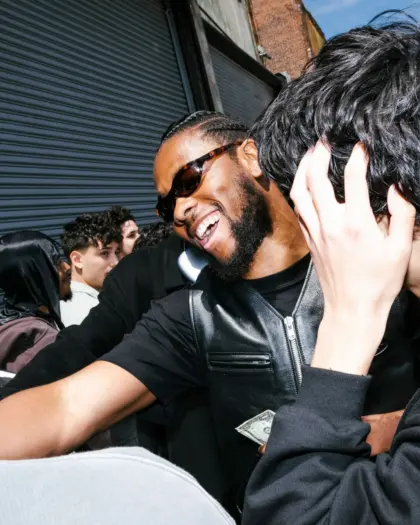
Look at one format they ran again and again through June and you can read the whole organic strategy off it. The setup is a street interview asking festival and campus crowds what is in your pre-night-out drink, cut with close-ups of the ingredients. No hero shot of the product on a marble surface. A person, a question, a bit of curiosity.
That single choice tells you they decided organic reach is a creative tax rather than free money. The cost is talent, ideas, speed and taste, and they paid it by picking formats people would actually watch even if they had no intention of buying anything.
Street interviews travel because they are entertainment first and product second. The ingredient education, the collagen and hyaluronic and electrolyte story, rides along inside a clip that already earned the view. Compare that to the default beauty playbook of posting product, posting founder, posting testimonial, which competes in the lowest-creativity lane on the platform and gets buried accordingly.
The practical version of this is format discipline. Instead of briefing one-off videos, K2O has a handful of repeatable templates the team can ship every week without reinventing the concept each time, from street interviews to festival recaps to athlete clips. That is what let 500-plus affiliate videos go up in a single day during the launch window without the whole thing collapsing into noise.
The bonus nobody talks about is that the organic winners become your paid winners. A street interview that pops organically is a tested creative you can put spend behind with far more confidence than a concept dreamed up in a studio. Entertainment on the way in, performance data on the way out.
Ninety hours of livestream from twelve people
Eighty-five to ninety-five hours of live selling a week, run by a team of twelve. Sit with that for a second, because it reframes everything.
CEO Jay Hunter hosts the bulk of it personally, running real-time Q and A, flash deals and loyalty mechanics on stream. His line is that the brand has to be its own best creator, and the livestream cadence is that belief turned into a schedule. When the founder is on camera for the better part of a full working week, the livestream stops being a marketing channel and becomes the storefront staff, the customer support desk and the entertainment all at once.
The twelve-person detail is doing real work in the storytelling too. K2O has leaned into the from a 12-person team framing, pairing it with the 4.3 million dollars in three months and the top 5 category ranking. It reads as proof that this is a lean, operationally sharp machine rather than a bloated celebrity vanity project with an agency behind every post.
I find the honesty of it useful. They have said out loud that there was no major retail launch, no traditional campaign and no celebrity-fronted ad spend behind the early numbers. Whether every rival believes that is beside the point. As a narrative it does two jobs at once, positioning the brand as scrappy and crediting the growth to the organic engine rather than to Kylie's fame.
A lean team hosting ninety hours of live commerce is not a model most brands can copy on Monday. But the underlying move, putting a real person on camera long enough to build genuine trust and treating that presence as the shop counter, is available to almost anyone willing to stop hiding behind polished assets.
Where most celebrity brands quietly die
The thing people get wrong about celebrity brands is assuming the fame is the product. It gets you trial. It does nothing for the second purchase, which is where most of these things quietly fall apart once the novelty burns off.
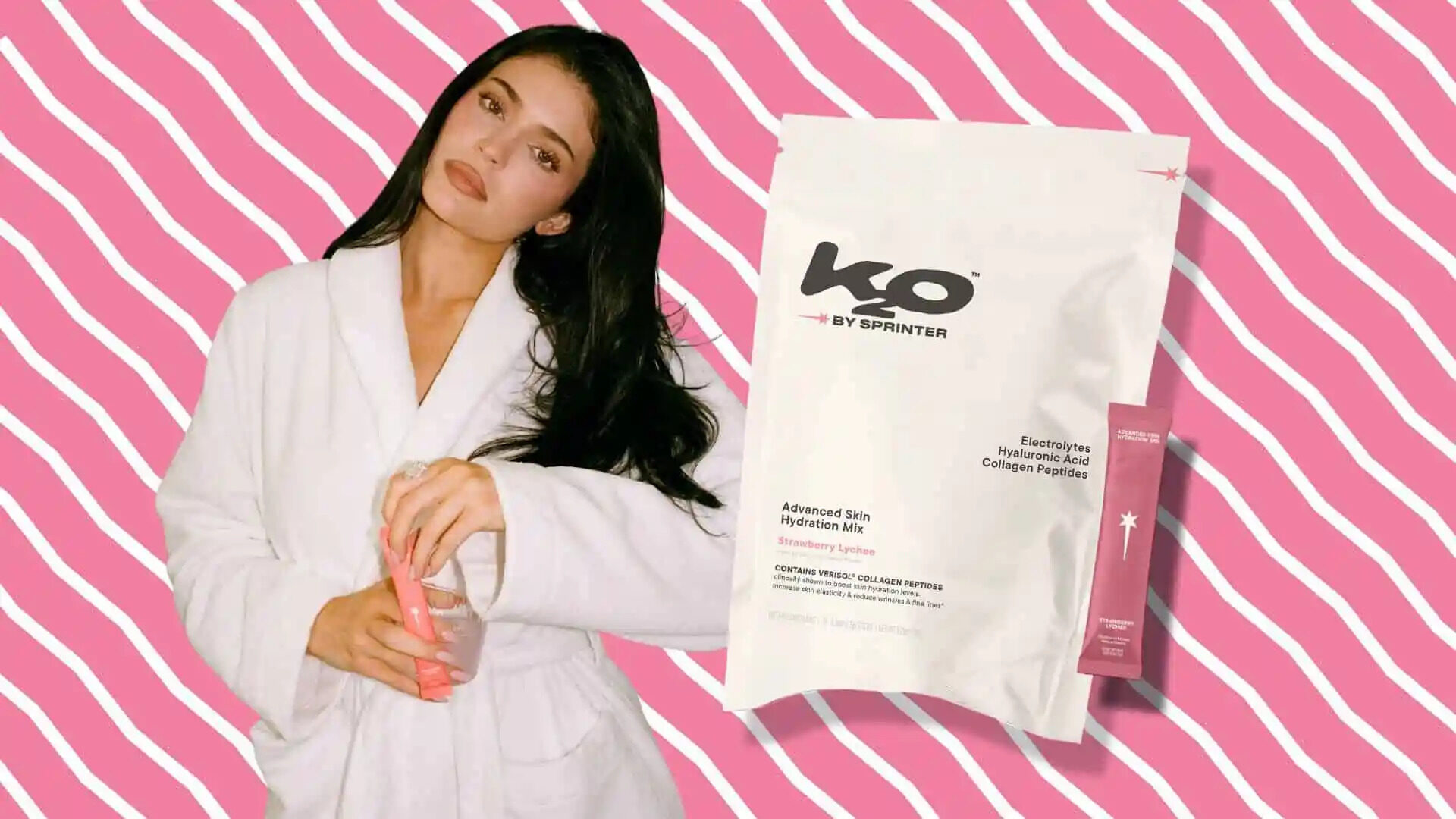
K2O clearly understood that from the start. Rather than sell Kylie made a thing, buy it, the brand grounded the pitch in efficacy, spotlighting Verisol collagen peptides and hyaluronic acid with clinical-backed language and the phrase advanced hydration you can stand behind. Ingredient close-ups, a named partner, claims built to survive scrutiny.
That is a conversion mechanic dressed as a branding decision. Creators sell what they believe, so a defensible product story lifts affiliate conversion in a way that a famous face on its own cannot. And in a regulated space like functional beauty, if you intend to scale hard your claims had better hold up, because aggressive growth on shaky claims is how brands end up rewriting their entire product page under pressure.
There is a retention argument too. Celebrity drives the first bottle off the shelf. Only a product that does what it says gets someone to reorder, and reorder is where the margin actually lives. A hydration stick that visibly delivers on the collagen and electrolyte promise turns a one-off Coachella impulse buy into a habit.
If I were putting money into a celebrity-led consumer brand, follower count would be near the bottom of my checklist. I would want to know whether there is a product thesis strong enough to keep people buying once the founder stops being the reason. K2O built that answer into the launch instead of hoping to add it later.
Should you scale Meta or chase the new thing
Here is the tension every growth team hits. You find a channel that reliably prints revenue, and then a shinier one appears and half the room wants to pivot. What do you actually do?
K2O's answer is a philosophy they call winners win, and I wish more teams operationalised it. Their Meta ads, running the drinkable beauty tagline straight through to Shopify checkout, became one of the top one or two revenue drivers by contribution margin. So they pour fuel into that rather than diluting focus across every channel that gets a headline.
That is quietly disciplined given how loud TikTok Shop is inside this same company. Plenty of brands would have declared Meta old news and thrown everything at the newer surface. Instead K2O runs both, keeps scoring the Meta-to-Shopify engine on incremental margin, and only entertains a new channel when it has the bandwidth to do that channel properly rather than half-heartedly.
The cadence underneath it is simple. Find your top one or two revenue drivers measured on contribution margin, not on views or reach. Keep feeding them while the incremental returns stay attractive. Say no to almost everything else until you have real capacity spare.
Focus is genuinely a growth advantage, and the brands that compound fastest tend to be the ones saying no most often. What I like about K2O's version is that they let numbers, not novelty, decide where the money goes. A machine that turns Meta spend into Shopify sales at a healthy margin is not something you abandon because a conference speaker told you the feed had moved on.
Number one abroad before anyone hired a distributor
Number one hydration product on iHerb by around day 14. That single data point is the entire international strategy in miniature.
Rather than the old routine of picking a country, hiring a distributor and praying, K2O went heavy on a scalable ecommerce partner first. It listed the Advanced Skin Hydration Mix on iHerb in the second week of May 2026, optimised the listing around hydration and beauty keywords, and let global purchase data tell it where the pull actually was.
This is risk-managed expansion, and it inverts the usual sequence in a way I find hard to argue with. You do not commit local capital on a hunch. You test demand cheaply through a partner that already ships worldwide, watch which markets respond, and only then build country-specific plays, whether that is direct, distributor or retail. Capital follows traction instead of a slide deck full of assumptions.
The iHerb result also does something for the domestic story. A hydration product hitting the top of the rankings on a global health platform inside two weeks is external validation that the appeal is not purely a Kylie phenomenon in one market. It suggests the drinkable beauty positioning translates.
The part worth copying is the humility built into it. K2O did not pretend to know which countries would work. It set up a fast ecommerce ramp, let real orders draw the map, and reserved its expensive, hard-to-reverse local commitments for the markets that had already proven they wanted the thing. That is a far cheaper way to be wrong, and a far faster way to find where you are right.
What I would do with retail and Amazon next
The interesting contrast now is between the two expansion routes K2O has teased, and the order it seems to be putting them in. Retail partnerships have been signalled as coming soon, and there are big plans for Amazon flagged for later in 2026, with a coming soon product page already in draft.
The stated intent is a steady state landing somewhere around 60 percent ecommerce and 40 percent retail, which tells you retail is treated as a scaling layer stacked on top of a proven D2C engine rather than a starting point. That sequencing is right. D2C gave them narrative and proof, the 12,000 orders and the sell-out. Retail adds volume, shelf trust and habitual re-buy in a category where people genuinely like buying where they already shop.
Amazon is the one I would watch closely. The read K2O has voiced, that Amazon might be undervalued right now because so many brands are distracted chasing TikTok Shop, is exactly the kind of contrarian bet I would take. Amazon captures intent and convenience that live commerce simply does not, and while everyone else piles into the same feed, the search box with a buy button sits there quietly underused.
My honest view on where this goes. The livestream-first, TikTok-Shop-as-storefront model is going to get crowded fast, and the brands that endure will be the ones that used that early velocity to fund a genuinely multi-surface presence before the platform's economics shift under them. K2O has the product truth, the margin discipline and the data to do that. If it moves onto Amazon and retail while the TikTok engine is still hot, rather than waiting until it cools, it will look less like a celebrity moment and more like a durable consumer business. That is the harder, smarter path, and everything about how they have sequenced this suggests they know it.