
Let the creative do your targeting for you
Meta is not broken. Most accounts are just feeding it nothing to work with. I hear "Meta is too expensive now" every single week, and the people saying it are almost always running broad audiences behind vague, vanilla ads that hand the system a context window the size of a postage stamp.
In 2026 the creative is the targeting. If the ad does not spell out who this is for and why, the algorithm cannot find that person cheaply, so you pay the difference in wasted impressions. I run targeting as simple as country-level, then I make the copy and visuals almost uncomfortably specific. The exact situation the buyer is in. The moment of frustration. The alternative they already tried and quietly gave up on. A clear "this is for you if" line. The outcome they actually want, not the one a brand deck says they should want.
When someone refuses to believe broad can beat a clever interest stack, I run the test in front of them. Take a winning ad that is currently riding interest layers, duplicate it, strip the interests so only location remains, then run both side by side for about a week and compare CPAs. Done honestly, it settles the argument almost every time. Broad plus specific quietly beats narrow audiences plus generic creative.
The reason this holds up is that Meta's automation got good at inference and bad at being micromanaged. Stacking five interests is no longer a signal of intelligence, it is a way of fighting a system that wants to read your ad and decide for itself. I would rather give it a sharper ad than a tighter audience, because the ad is the only lever that still compounds.
Longer copy feeds the engine, short copy starves it
Body copy is training data for delivery. That single reframe changes how much you write and why.
Most teams write short because they think attention is scarce, and they end up doing two kinds of damage at once. They persuade less, and they tell Meta almost nothing about who the offer is for. When I write longer, I am encoding signal on purpose. Who this is for and, just as usefully, who it is not for. The pains, the desires, the objection that usually kills the sale. The use-cases and the actual language patterns my ideal customer uses to describe their own problem.
Think of broad campaigns as having a context starvation problem. You have removed the interest scaffolding, so the only place the system can learn from is the ad itself. A three-line ad gives it scraps. A genuinely written piece of copy that names the situation, the frustration and the result gives it something to map against the right people.
This is the cheapest way I know to make broad targeting profitable without adding any complexity to the account. No new structure, no exotic settings, no manual carve-up of audiences. Just more honest words doing quiet work in the background. I would happily run a long, plain, specific ad over a slick short one, because the long one is teaching the algorithm while it sells.
Ads that look like ads are dead on arrival
Here is what most people get wrong about "native" creative. They treat it as an aesthetic, a slightly grainy filter slapped on a brand shoot, and then wonder why the feed still ignores it.
The feed is a content environment, and people scroll it to be entertained or informed, not advertised at. The winners I see in 2026 borrow the formatting, tone and pacing of organic posts, sometimes as simple statics, sometimes as content that already earned attention organically before it ever became an ad. UGC carries a lot of this load for me, and I run it across the whole funnel rather than parking it in one stage. It works on cold traffic because it reads as a real person, it works in retargeting because it answers doubt, and it works in retention because it keeps the relationship feeling human.
Growthcurve's own distribution makes the point without a media budget. There is a short Instagram reel that strips the whole doctrine down to one blunt idea, that paid media should reconcile to the P&L, delivered on camera with no polish and no theatre. That tone is the tell. It looks like something you would stop on anyway.
My north star for any unit is whether a user would have chosen to consume it if it carried no logo. If the honest answer is no, the production value does not save it. A beautiful ad that announces itself as an ad gets the same treatment as every other interruption, which is a thumb moving past it.
Why I bet on statics and a weekly hour
If I could only keep one format for scaling, I would keep the static, and it has nothing to do with video being weak.
Video works. It can work very well. But statics win the thing that actually decides Meta outcomes over a year, which is creative throughput. You can produce a static in minutes, you can test far more angles per week, and the platform can serve more static units per session, which hands you a delivery advantage before you have done anything clever. Speed and volume beat cinema when the game is finding which message lands.
That advantage only shows up if you keep feeding it, which is why I protect a weekly creative hour as a non-negotiable block. Not a quarterly brand shoot. Not waiting for inspiration to arrive. One recurring hour to generate fresh expressions of the same winning offer, with the offer held stable and the goal held stable so the only thing changing is the message. Some people run this as a refresh every seven to ten days with ten or twenty variations going in at a time, which is the same instinct dressed differently.
The failure I am designing against is familiar to anyone who has run an account for a while. You find a winner, it carries you for a few weeks, it fatigues, and performance falls off a cliff because nothing was being built behind it. Statics plus a weekly habit are how you keep the bench deep enough that no single ad fatiguing ever becomes a crisis.
Never scale one winner, scale a family
Watch what a team does the moment they find a winning ad, and you learn everything about whether the account will survive the next quarter.
The amateur move is winner worship. One ad starts performing, so everything else gets switched off and the budget gets shoved into the single file. It feels disciplined. It is actually a guarantee that the ad fatigues and the account collapses back to zero, because you have bet the whole channel on one creative that was always going to wear out.
When an ad wins for me, I treat it as a template rather than a trophy. I clone the structure, not the file. Same core promise, same narrative arc, same voice, then many close variations around it so spend can roll from one to the next without a cliff. The system is full of variants that share an identity, so when one tires, another is already warm.
Production is no longer the excuse it used to be. I take the winning copy and concept, push it through AI for hundreds of variations that still read as if the same author wrote them, and personalise versions to slightly different avatars while keeping the bones identical. The discipline that keeps this from turning into noise is the order of iteration. Body copy first, then headlines, then creative, one variable at a time. Change five things at once and call it a test, and you have learned nothing except how to fool yourself. Cluster scaling is how a winner becomes a fortnight of compounding rather than a spike followed by a hangover.
The campaign I build for the ads nobody serves
What happens to the ad you genuinely believe in that the system simply never serves? In a budget-optimised structure, spend flows to whatever gets early traction, which sounds fair until you realise some of your best ideas die having never received enough delivery to prove anything.
That under-delivery problem is why I keep a separate lane I call the zombie campaign. It is where I dump the ads that got little or no spend in the main structure, and its only job is to force delivery on them. More often than you would expect, it resurrects a winner the primary campaign had quietly buried. One habit, almost no added complexity, and a measurably better hit-rate on the creative you have already paid to make.
The wider account stays deliberately plain. I am happy running close to a two-campaign setup, one for testing and one for scaling, and letting the creative carry the learning rather than the structure. Rebuilding account architecture in search of a secret setting is how people avoid the harder work of making more ads.
This is the part of the job that rewards patience over cleverness. Budget optimisation does its work, the zombie lane catches what it ignores, and the account keeps surfacing performers instead of strangling them at birth. I would always rather give a promising ad a forced shot at delivery than trust a single optimisation pass to have judged it correctly on day one.
Where 20 headlines become one honest landing page
A 15 to 20 percent lift in conversion rate, from a change that costs nothing in media. That is the number I keep coming back to, and it comes from aligning the landing page with the best-performing ad headline and framing.
Most Meta performance problems get diagnosed as media-buying problems when they are actually message mismatch. The ad makes a promise, the click lands on a page making a slightly different promise in slightly different words, and the visitor feels the seam without being able to name it. So I use Meta as a headline lab. Run twenty to forty headline variations, find the one that genuinely pulls, then mirror that headline and its supporting lead-in straight onto the landing page so the ad and the page read as one continuous argument rather than two.
That congruence is where the 15 to 20 percent tends to come from. Nothing about the audience changed, nothing about the bid changed, the visitor simply arrived somewhere that matched what made them click.
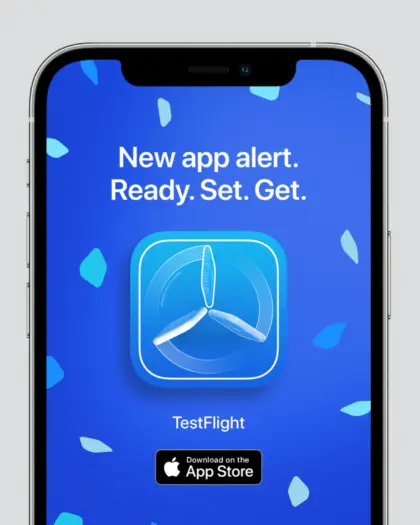
The same logic extends well past the web. In app growth, every major paid angle needs matching store screenshots, subtitles and first lines, so the App Store listing finishes the argument the ad started. I treat ads and landing pages, or ads and store listings, as one surface that has to stay consistent end to end. The teams that separate them keep optimising the wrong half and wondering why the easy win never shows up.
Always three tests, or the account quietly rots
I hold myself to a simple standard. At least three split tests running at any moment. Not when there is spare time, not when performance dips, always.
The day you stop testing is the day the account starts decaying, and the cruel part is that you will not feel it for about two weeks. By then the slide is already underway and you are reacting instead of compounding. Three live tests is the floor that keeps learning moving faster than fatigue. Underneath that sit the boring prerequisites that make any of it trustworthy, a clean CAPI and Pixel setup feeding accurate conversion data, because Meta's automation is only as good as the signal you hand it.
It is worth seeing how Growthcurve packages all of this, because the format is the strategy. The same doctrine gets repeated as a long-form article, a LinkedIn playbook, talking-head YouTube breakdowns on the 2026 system, and that blunt Instagram reel, each one restating that Meta is not broken and that creative is the targeting. That is a content engine built to own the "2026 Meta ads" conversation in performance-marketing circles, and the repetition across formats is the point rather than an accident.
My honest read on where this goes. As Meta's automation keeps absorbing the targeting and bidding decisions, the only durable advantage left is creative volume, message congruence and the discipline to keep testing when nothing is on fire. CPMs will keep drifting up and people will keep blaming the platform. I expect the gap between the complainers and the compounders to widen, and I would bet on the team shipping fifty honest statics a month over the one hunting for a hidden setting every time.