

The channel most brands use as a billboard
Most brands I have worked with treat TikTok as the top of the funnel and send everyone off to a website to actually buy. K2O did the opposite. It launched D2C-only, made TikTok Shop its first ecommerce partner, and ran the platform as the till rather than the poster. The results back the decision. In the first seven days the brand booked 12,000-plus orders and sold through its entire opening inventory, roughly doubling the sales target it set. By day 11 it sat in the top 5 of TikTok Shop's health category, and three months in it had turned over 4.3 million dollars. Those are not awareness numbers. That is a shop doing volume. What changes when you commit to this properly is your whole operating rhythm. You stop obsessing over CPMs and start counting sell-through per piece of content. You push creator throughput and creative volume ahead of brand polish, because a slightly rough affiliate clip that converts beats a beautiful hero film that nobody buys from. And your merchandising becomes creative work in its own right, since the bundle, the flash deal and the price ladder are all part of what makes a livestream convert. K2O leaned into that with red packets, loyalty points and five-minute flash deals dropped mid-stream, each one designed to keep viewers inside the app rather than bouncing to a checkout somewhere else. Every bit of gamified friction reduction is really about compressing the distance between wanting the thing and owning it. If you are still pointing your best TikTok traffic at a landing page, you are adding steps that the fastest-growing consumer brands have already deleted.
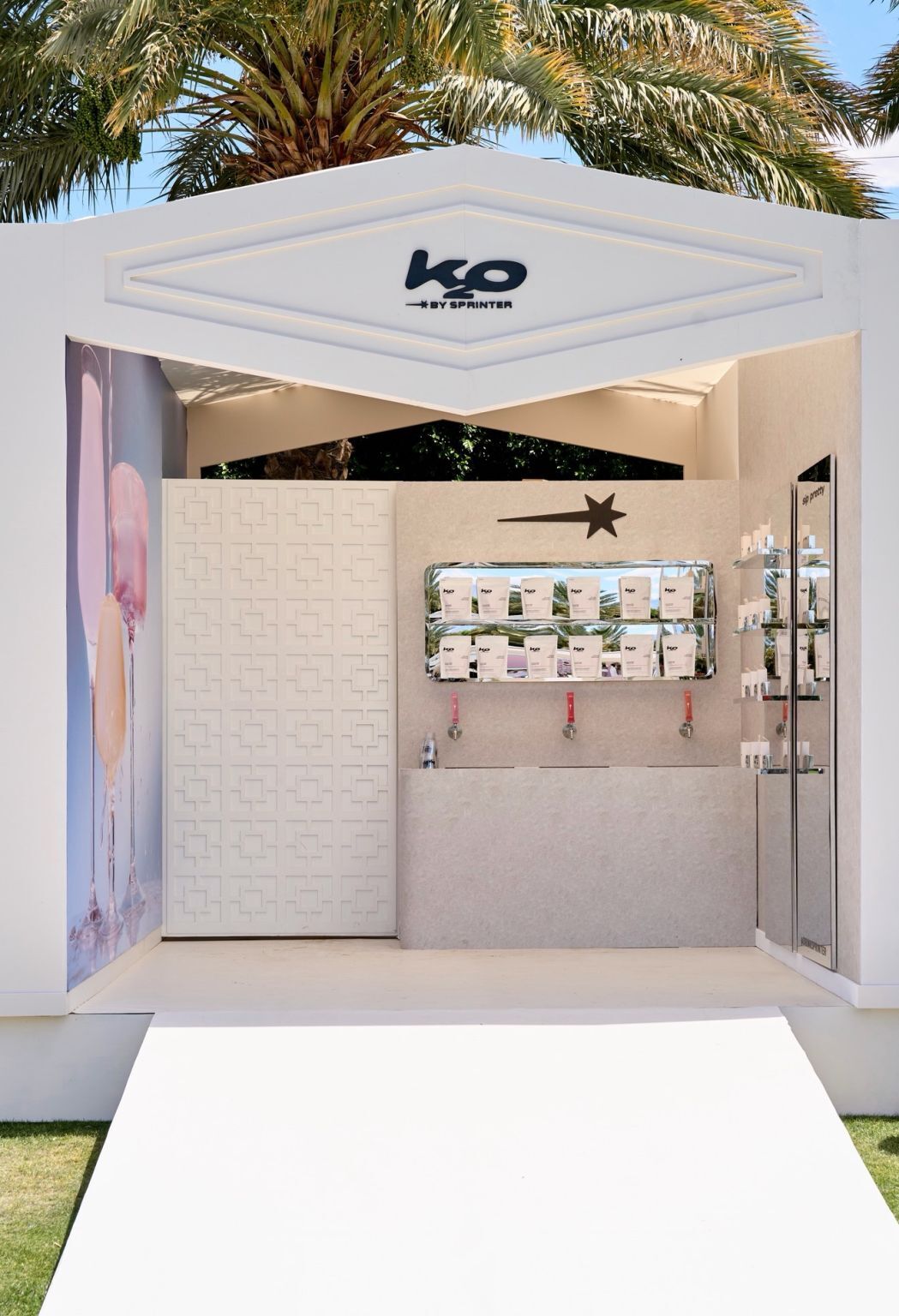
A festival booth that was really a launch
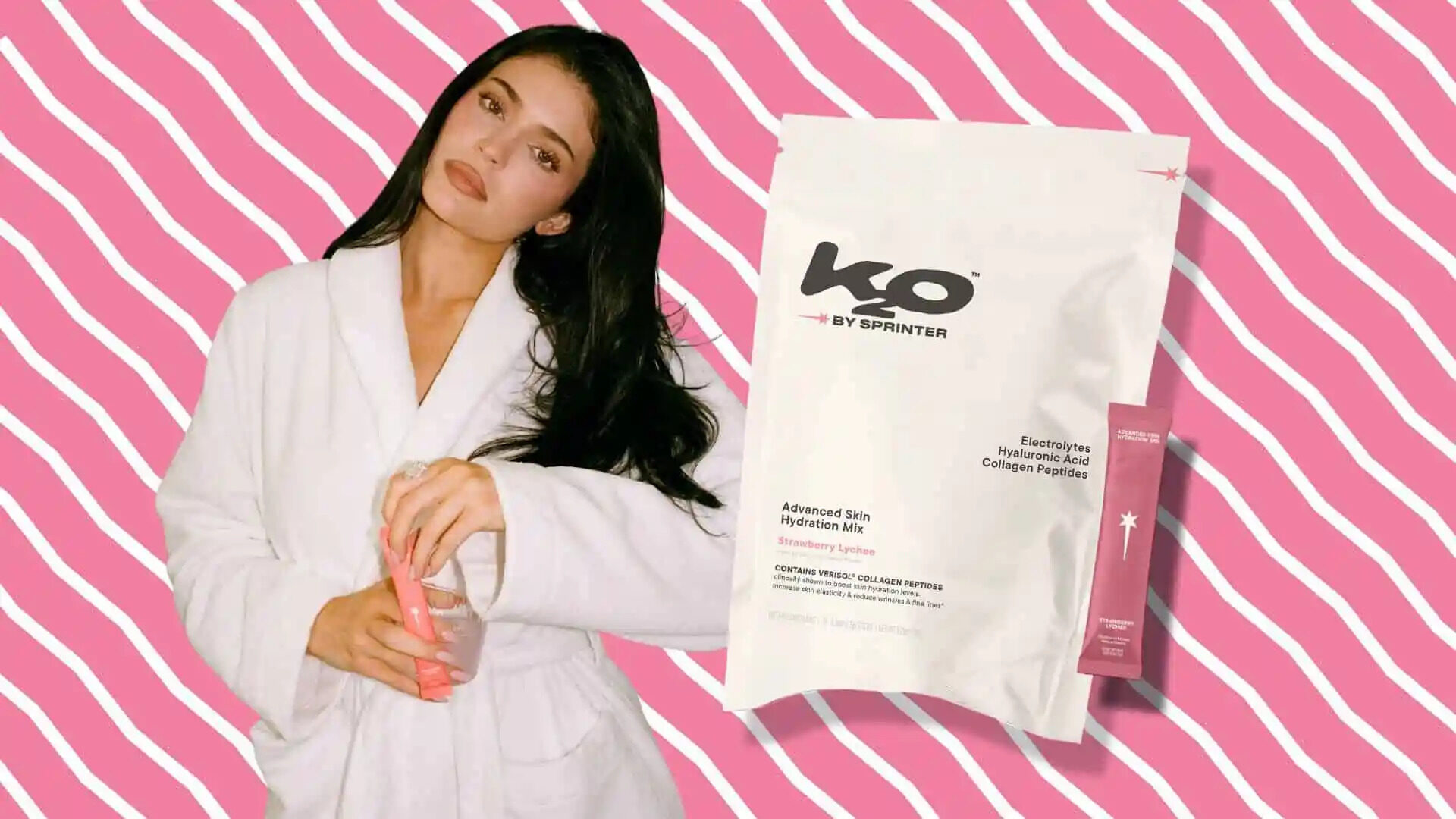
In April 2026 K2O showed up at Coachella with a branded booth, tambourine logo everywhere, and hydration sticks being handed out to anyone within reach. On the surface it read as a sampling stunt. It was actually the opening move of the entire launch. The framing they chose was drinkable beauty for before and after the night out, built on collagen peptides, hyaluronic acid and electrolytes. A festival is the single most on-nose place to make that pitch, because everyone there is dehydrated, photographed constantly, and worried about how they look at 2am. Handing a beauty-led hydration stick to that exact person is about as clean a product-context match as you get. They also invited 50-plus of their top customers into the activation and let influencers take it over, which meant the booth was generating content at the same time it was generating trial. That is the part I would steal.
A physical activation that only produces footfall is a cost. One that produces a stream of first-person clips from people your audience already trusts is a media buy that happens to have a tent attached. The tagline that came out of it, drinkable beauty before the night out and after, then carried across every channel through the summer. Coachella did not just introduce a product. It manufactured the anticipation that the TikTok Shop sale later converted, so by the time the livestreams started the audience had already been primed for weeks. Launching cold is expensive. Launching into a crowd you have already warmed up is why the opening inventory vanished in a week.
Why the street interviews outperform product shots
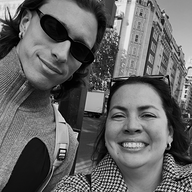
Look at one format they ran again and again through June and you can read the whole organic strategy off it. The setup is a street interview asking festival and campus crowds what is in your pre-night-out drink, cut with close-ups of the ingredients. No hero shot of the product on a marble surface. A person, a question, a bit of curiosity. That single choice tells you they decided organic reach is a creative tax rather than free money. The cost is talent, ideas, speed and taste, and they paid it by picking formats people would actually watch even if they had no intention of buying anything.
Street interviews travel because they are entertainment first and product second. The ingredient education, the collagen and hyaluronic and electrolyte story, rides along inside a clip that already earned the view. Compare that to the default beauty playbook of posting product, posting founder, posting testimonial, which competes in the lowest-creativity lane on the platform and gets buried accordingly. The practical version of this is format discipline. Instead of briefing one-off videos, K2O has a handful of repeatable templates the team can ship every week without reinventing the concept each time, from street interviews to festival recaps to athlete clips. That is what let 500-plus affiliate videos go up in a single day during the launch window without the whole thing collapsing into noise.
The bonus nobody talks about is that the organic winners become your paid winners. A street interview that pops organically is a tested creative you can put spend behind with far more confidence than a concept dreamed up in a studio. Entertainment on the way in, performance data on the way out.
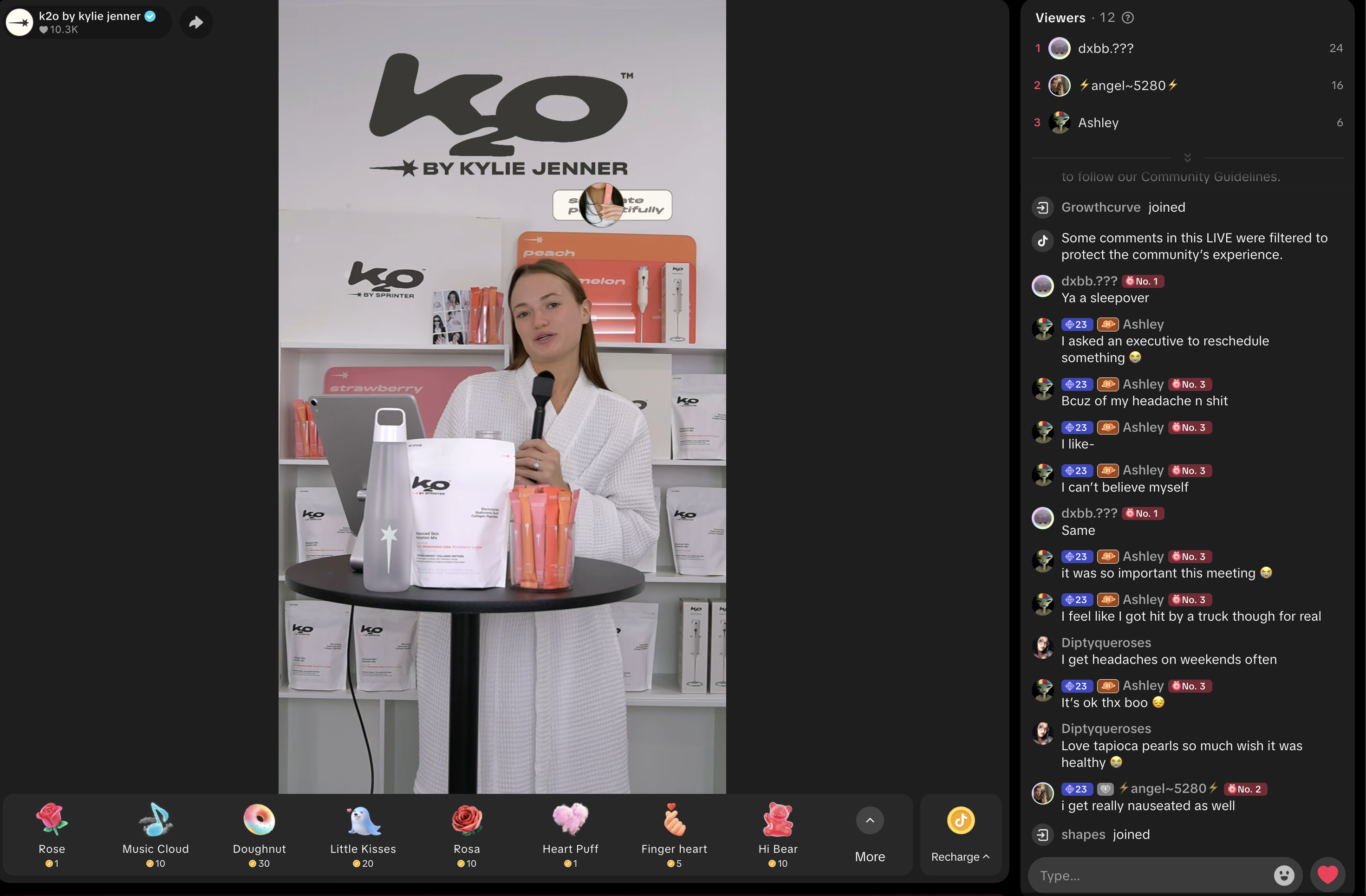
Ninety hours of livestream from twelve people
Eighty-five to ninety-five hours of live selling a week, run by a team of twelve. Sit with that for a second, because it reframes everything. CEO Jay Hunter hosts the bulk of it personally, running real-time Q and A, flash deals and loyalty mechanics on stream. His line is that the brand has to be its own best creator, and the livestream cadence is that belief turned into a schedule. When the founder is on camera for the better part of a full working week, the livestream stops being a marketing channel and becomes the storefront staff, the customer support desk and the entertainment all at once. The twelve-person detail is doing real work in the storytelling too. K2O has leaned into the from a 12-person team framing, pairing it with the 4.3 million dollars in three months and the top 5 category ranking. It reads as proof that this is a lean, operationally sharp machine rather than a bloated celebrity vanity project with an army of people behind every post. I find the honesty of it useful. They have said out loud that there was no major retail launch, no traditional campaign and no celebrity-fronted ad spend behind the early numbers. Whether every rival believes that is beside the point. As a narrative it does two jobs at once, positioning the brand as scrappy and crediting the growth to the organic engine rather than to Kylie's fame. A lean team hosting ninety hours of live commerce is not a model most brands can copy on Monday. But the underlying move, putting a real person on camera long enough to build genuine trust and treating that presence as the shop counter, is available to almost anyone willing to stop hiding behind polished assets.
Where most celebrity brands quietly die
Should you scale Meta or chase the new thing
Number one abroad before anyone hired a distributor
What I would do with retail and Amazon next